[Interview with management] Aiming to become a company where "everyone can become a great person" - The "changes" that XICA CEO Hirao has brought about within the company

"Innovation" creates new products, services, business models, and markets. Innovation (= transformation) is essential for corporate growth and industrial development.
So what are the elements necessary for a company to bring about change? And what kind of self-transformation is required of individuals working in such an organization? This series will focus on the theme of "change" and will share the thoughts of four members of XICA's management team.
XICA was founded in 2012 with the desire to "eliminate hopeless sadness." Now, 10 years after its founding, the company continues to challenge itself to bring about social change with "talent development" at its core.
"Talent Blossoming" is a phrase that CEO Yoshiaki Hirao has been promoting since the company's founding. It expresses his desire to help society and the members of XICA realize their potential.
Why does developing all kinds of talents lead to the elimination of hopeless sadness and bring about social change? We spoke to Hirao himself about his own experiences and the connection between "talent development" and "change."

CEO of XICA Co., Ltd.
Yoshiaki Hirao
Graduated from Keio University Faculty of Policy Management in 2012. In parallel with his studies, he was active as a musician in Japan and Korea. After his father's company went bankrupt, he discovered the potential of statistical analysis while at university, and founded XICA Inc. in February 2012. Based on statistics and economics, he has provided consulting to many major clients on improving marketing accuracy. Based on this knowledge, he has served as product owner for the development of various tools at XICA.
The idea of "talent development" was born during my university days
- How did you start thinking about the "talent" of all people?.
Going back a little, when I was in junior high school, the company my father worked for went bankrupt and there was a series of misfortunes around him.
I was shocked to learn that even my father, who was a section manager at the time, only found out about the company's bankruptcy 30 minutes before the press conference. I learned that there is "helpless sadness" in the world, where people's lives are restricted without them being able to resist.
From there, I started making music to help ease the sadness that people felt. My activities gradually expanded, and while studying economic policy at university, I began playing in bands in Japan and Korea.In fact, it was my time as a university student doing this activity that marked the beginning of my thinking deeply about people's "talents."
At the time, college graduates were rare among my close musical friends, but there were quite a few who were naturally smart and intelligent. However, there were also many who put a cap on their own intelligence, saying, "I didn't go to school anyway," and I felt that this was a waste.
On the other hand, at my university, there are quite a few people who have exceptionally creative ideas in the arts and music fields, but give up on a professional path, thinking they have to get a job at a regular company.
It was connected to my original experience."I want to create a world filled with talent and free of restrictions."I think that's where that idea started.

-How did these thoughts lead to you starting a company called XICA, which deals with statistical analysis?
While I was doing music in both Japan and Korea, I started to feel a cultural gap between the two countries. Wanting to know what was behind this, I majored in economic policy, where I could learn about the political and economic developments of various countries. One day, while taking a statistical analysis class,The company where my father worked was featured as a case study..
Until then, I had unconsciously thought of "helpless sadness" as something that would inevitably arise, so I was shocked to learn that there is a "way to prevent sadness from arising."
Should I save companies in similar situations and prevent further sadness? Or should I accept that sadness can't be helped and pursue the path of healing people through music?When the two options were presented, I chose the first one.
The XICA WAY philosophy aims to bring about change in society by developing the talents of its members

--You said that in order to prevent "sadness" from occurring, you will use data science to bring out all kinds of talents. What is your current understanding of the people you are "bringing to life"?
Companies, society, and the people working at XICAIn particular, two years ago, we established a code of conduct called the "XICA WAY," and began creating an environment in which members could develop their own talents.
-What exactly is the XICA WAY code of conduct?
Simply put,How to help employees develop their talents and bring about change in societyIt consists of 12 guidelines.

The goal of the correlation diagram is defined as "bringing out the talents of society," and the ways to get there are structured in a triangle.
What's unique about XICA WAY is that each of the 12 WAYs is interconnected.In order to understand each employee's aspirations, we have deliberately not decided on a starting point or implemented a gradual structure.I took it.
For example, there is a guideline for the mindset of "loving challenges," but not everyone may feel like "I'm going to take on new challenges!" from the beginning. If you define this as the starting point, you may get discouraged before you can set a goal and put it into action.
For some people, starting from "continuous learning through practice" allows them to set high goals and ultimately to love the challenge.If each person could take action to "develop their talents" while searching for a method that suits them best,, I think.
How to put XICA's code of conduct "XICA WAY" into practice (October 2021 edition) | XICA Corporation
- Has this idea of "bringing about change in society by developing the talents within the company" been there since the company was founded?
When we first started the company, we didn't have a clear goal. I think I was concentrating on developing "social talent.""I'm sure the members will understand without me having to say anything."But then in 2017, more than half of the employees resigned...
That was the first timeThe underlying idea of "developing talent" was not fully conveyed to the members.So I decided to clearly define the essential meaning of what "talent development" is aiming for and make it known throughout the company.
The XICA WAY was established byBecause I wanted the members to have a deeper understanding of the term "talent blooming"Now, all employees participate in a workshop once a year, where they discuss and gradually renew the design.
Always question assumptions and bring about change for the better

-It's now been six years since you decided to bring about "internal change" at XICA. What kind of members are currently working there?
I think we have a lot of people who are eager to grow. Many of our members believe in their own potential from the moment they joined the company.People who believe in themselves and can make changes are the ones who can change societyThat's why it's an important point for us when we hire new members.
Conversely, I believe that people who have experience and skills but cannot believe in their own growth and potential will remain hesitant to bring about change in themselves, their organizations, and society.
What I want to achieve is:A company where anyone can become a great personEven if you change jobs to another company among various career choices,"If you're from XICA, you can trust me."I want to produce people who think, "This is the talent I can bring to the world!" I would be happy if people who have the potential to "bloom their talents" and who believe in their own "blooming talents" continue to gather together.
-How would you like to convey the appeal of XICA to people with that kind of potential?
An environment where you can systematically develop your talentsJust like XICA WAY, we are creating a system that can support all kinds of people, so I want people to expect that they will be able to grow in some way.
in addition,Developing one's talents is directly linked to social changeYou can experience this for yourself. We use data and technology to unravel the complexities of the industry and eliminate the black box. We don't just improve the efficiency of marketing work, we create new industrial opportunities. Because we provide services that revolutionize existing things, you can witness society changing at an incredible speed.
Change is our valueIt's no exaggeration to say that.

-Finally, please tell us your definition of the word "transformation."
Questioning assumptions, identifying the essence and making changes for the better.
To bring about change, it is important to have a way of thinking that can resolve doubts and contradictions. Just as Cugnot, who wanted to go faster and farther, invented the automobile, and the Wright brothers, who believed that people could fly, built the airplane, people who questioned the common sense of society and the way of life that was taken for granted have brought change to the world and moved history.
Please do not misunderstand that the data analysis we provide is merely one method, not the goal. When trying to create innovation, people often focus on methods such as digital transformation and trendy keywords, but that is not the essence.
Of course, we will continue to focus on data science. However, we will continue to provide our services in the following ways:Confronting contradictions with the weapon of data scienceI want to continue to hone my mindset of questioning assumptions and continue to improve even the results I've just achieved by asking myself, "Couldn't we do better?" In this way, I want to continue to bring about various changes.
*The affiliation and title of the interviewee are those at the time of the interview.
[Interview and text] Nozomi Takagi
[Editor] Yuko Kawabata (XICA)
Related Articles
-
 About XICA
Next-Generation Management Required in the AI Era: How to Guide the Evolution of Individuals and Organizations | AWA 2025 Keynote Session Report
-
 About XICA
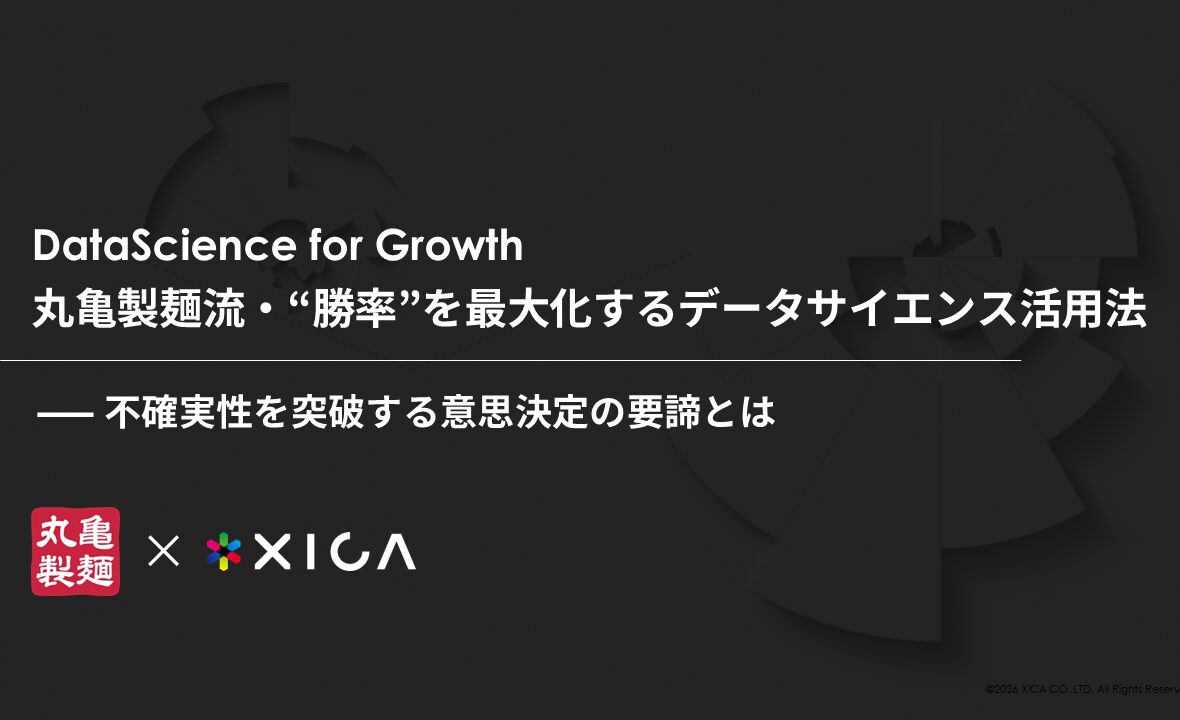
DataScience for Growth: Marugame Seimen's Method for Maximizing "Winning Probability" Through Data Science – The Key to Decision-Making That Overcomes Uncertainty [MarkeZine Day 2026 Spring Event Report]
-
 About XICA
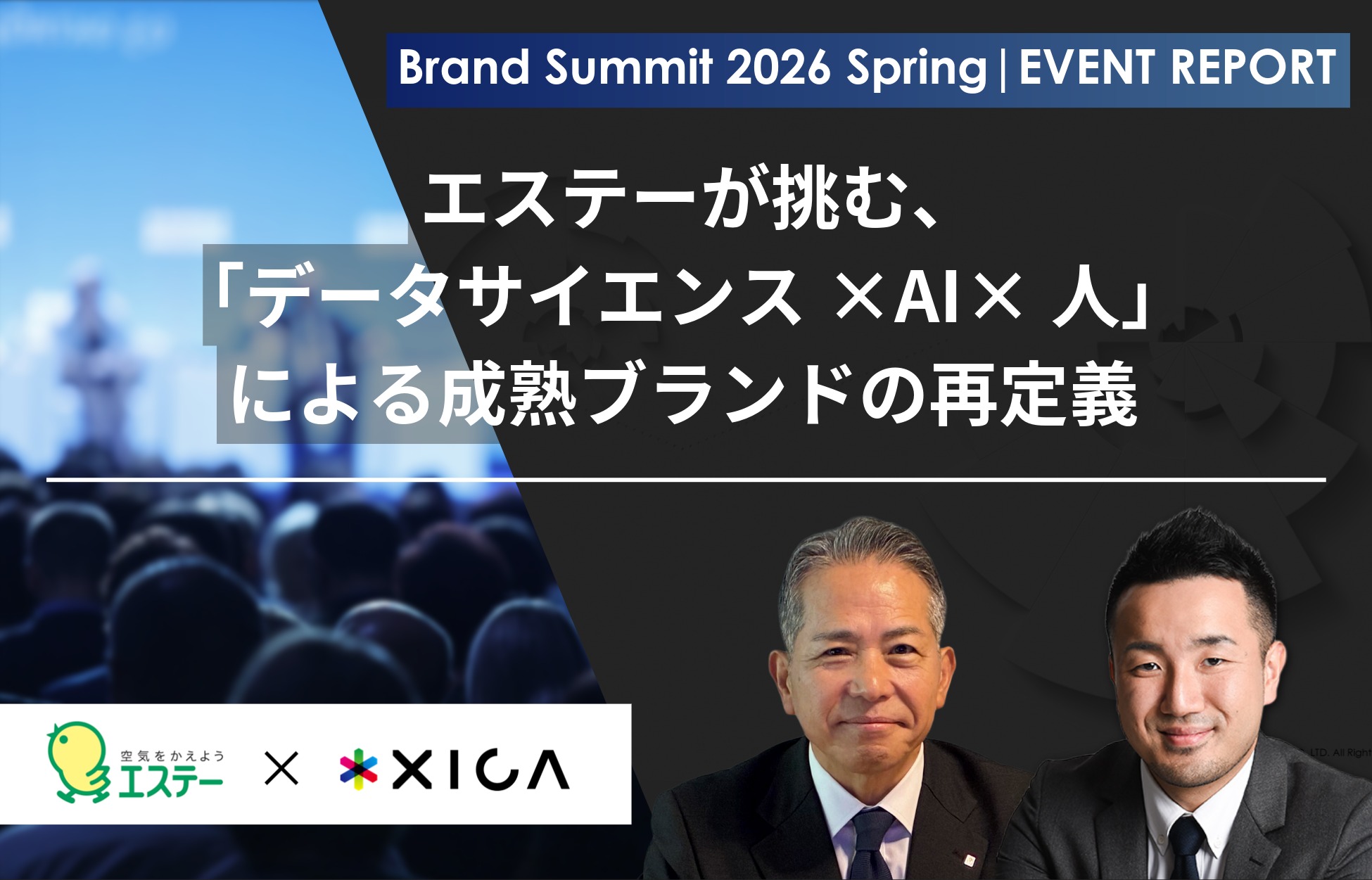
ST Corporation's Challenge: Redefining Mature Brands Through "Data Science x AI x Human Resources" [Brand Summit Spring 2026 Event Report]