A Comparison of 24 Marketing Consulting Firms | A Thorough Explanation of Types, How to Choose, and Cost Estimates

A marketing consulting firm is a company that provides external expert support to businesses facing marketing challenges, from market analysis and strategy planning to implementation and effectiveness evaluation. As marketing activities become more sophisticated and complex, an increasing number of companies are seeking to incorporate external expertise.
However, when you actually try to find a marketing consulting company, you'll find a variety of types, such as strategy-focused, advertising agency-focused, digital-focused, and data science-focused, and many people may be confused about which type is right for their company, what the typical costs are, and what criteria to use when choosing one.
This article systematically explains everything from the basics of marketing consulting firms to the benefits of hiring one, typical costs, five key points for choosing one, and the characteristics of eight different types of firms, along with 24 representative companies.
In addition, we cover important points to consider when making a request and frequently asked questions, providing comprehensive information for executives and marketing managers considering placing an order to find the best partner for their company's specific needs.
table of contents
- Comparison list of 24 recommended marketing consulting companies
- 1. What is a marketing consulting firm? Basic knowledge you should know before hiring one.
- 2. Three advantages of hiring a marketing consulting firm
- 3. [By Fee Structure] Explanation of the Average Cost of Marketing Consulting
- 3-1. Project-based: Short-term contracts aimed at solving specific problems.
- 3-2. Consulting Agreement Type: A medium- to long-term contract aimed at continuous improvement.
- 3-3. Performance-based fee: Fees vary depending on sales or the number of inquiries.
- 3-4. Spot/Hourly Contract Type: One-off consultations and advisory services
- 4. Five key points for choosing a marketing consulting firm that won't disappoint.
- 4-1. Does the consulting firm's expertise match the challenges your company wants to solve?
- 4-2. Do you have extensive experience supporting companies in similar industries or of a similar size?
- 4-3. Is it possible to provide consistent support from strategy formulation to implementation of measures?
- 4-4. Is there a system in place for data utilization and effectiveness evaluation?
- 4-5. Is the balance between costs and support appropriate?
- 4-6. Selection Checklist
- 5. A Comparison of 8 Types of Marketing Consulting Companies [By Category]
- 5-1. [Strategy-related] Strategy and management consulting that provides support from the perspective of business strategy.
- 5-2. [Advertising Agency Type] Advertising agencies that provide integrated support for media and creative services.
- 5-3. [Digital Specialist] Digital marketing specialist with strong expertise in web, SEO, and performance-based advertising.
- 5-4. [Research-related] Research and survey data companies specializing in market research and consumer research.
- 5-5. [B2B Specialized] B2B/MA Specialists with strong expertise in corporate marketing.
- 5-6. [PR-related] PR agencies specializing in branding and generating buzz.
- 5-7. [IT Consulting] IT consulting and system integrators with strong expertise in implementing CRM/CDP/MA systems.
- 5-8. [Data Science] Specialized in supporting marketing decision-making through data science and data-driven approaches.
- 6. Procedures for requesting marketing consulting and expected outcomes
- 7. Points to note when hiring a marketing consulting firm
- 8. Frequently Asked Questions about Marketing Consulting Firms
- 8-1. How can I determine the cost-effectiveness of marketing consulting?
- 8-2. Can small and medium-sized enterprises and startups request consulting services?
- 8-3. Are there any typical patterns of failure when hiring a consulting firm?
- 8-4. Is it possible to request services for short periods only?
- 8-5. How should I choose if I want industry-specific support?
- 9. Summary: Choose a marketing consulting firm that suits your company's challenges.
Comparison list of 24 recommended marketing consulting companies
This article lists 24 marketing consulting companies, categorized into eight types. For details on each company, see "5. A Comparison of 8 Types of Marketing Consulting Companies [By Category]” explains.
| Company Name | Type | Main Strengths | Suitable companies |
|---|---|---|---|
| Boston Consulting Group | Strategy | Upstream strategy design based on global industry insights and advanced analytics. | Large companies facing decision-making that will involve major transformations |
| PwC Consulting | Strategy | Comprehensive capabilities ranging from strategy formulation to business process reform and risk management. | Large and medium-sized companies that want to address complex management issues across different sectors |
| デロイト トーマツ | Strategy | Comprehensive support from strategic planning by the Customer Department to the digital domain. | Companies that want to rethink their customer strategy and experience design as an integrated whole. |
| Dentsu Consulting | Advertising agency | Cross-functional support from upstream to downstream in collaboration with various Dentsu Group companies. | Companies that want support throughout the entire process of building and establishing a marketing organization. |
| Hakuhodo Consulting | Advertising agency | Building a brand strategy based on a "consumer-centric approach" | Companies that want to rethink their marketing based on brand value |
| ADK Marketing Solutions | Advertising agency | Integrated coverage of mass advertising, digital advertising, e-commerce, and CRM. | Companies seeking integrated support that transcends media boundaries |
| オプト | Digitalization | Data measurement, integration, and utilization using our proprietary platform "ONE's Data" | Companies that want to integrate all aspects of the digital domain under cookie restrictions |
| PLAN B | Digitalization | Results-oriented operation and improvement proposals centered on SEO and web advertising. | From small and medium-sized enterprises to large corporations considering in-house production. |
| Nile | Digitalization | Support for SEO, content marketing, and the use of generational AI. | Companies that want to strengthen their marketing starting with search traffic |
| Intage Holdings | Research-related | Continuous market tracking using large-scale panel data | Companies seeking to deepen their market understanding in the consumer goods and healthcare sectors |
| Macromill | Research-related | Large-scale panel network and the speed of online research | Companies that want to conduct large-scale quantitative research in a short period of time |
| Cross Marketing | Research-related | Global research leveraging domestic and international networks | Companies with overseas market research needs |
| talent | BtoB specialized | Systematized and publicly available B2B marketing methods | SaaS and IT companies seeking reproducible models |
| Symphony Marketing | BtoB specialized | Neutrality in MA tool selection through multi-vendor support | Companies that want neutral advice from the tool selection stage |
| One Marketing | BtoB specialized | From implementation to operational stabilization of Marketo, HubSpot, and Salesforce. | Companies that want to achieve results by making full use of their existing marketing automation (MA) systems. |
| Vector | PR-related | Comprehensive coverage ranging from general PR to digital PR and social media marketing. | Companies aiming for large-scale integrated campaigns and publicity stunts |
| Dentsu PR Consulting | PR-related | Years of experience in media relations and crisis management public relations. | Companies seeking PR design integrated with advertising and creative work |
| PRAP Japan | PR-related | PR design and crisis management public relations utilizing data analysis | Companies that want to cultivate their corporate brand over the medium to long term. |
| 野村総合研究所(NRI) | IT consulting | A one-stop service from strategic recommendations to system construction and operation. | Large companies involved in large-scale projects such as finance |
| NTT data | IT consulting | Track record of building large-scale systems of social infrastructure caliber. | Companies are promoting system integration across group companies. |
| Accenture | IT consulting | Integrated delivery of strategy, consulting, technology, and operations. | Companies aiming for large-scale marketing DX |
| XICA | Data Science | Decision support integrating analytical consulting with a proprietary AI platform. | Companies that want to establish data-driven decision-making as an organizational capability |
| BrainPad | Data Science | Ownership of the DMP/CDP "Rtoaster" and support from concept formulation to operation. | Companies that want to entrust the entire process of data utilization, from conception to operation, to a single company. |
| Plaid Alpha | Data Science | CX-driven support utilizing first-party data from "KARTE" | Companies aiming to enhance customer touchpoints and customer experience |
[By Challenge] Quick Reference Guide to Recommended Marketing Consulting Companies by Type
You can narrow down which type is right for your company by working backward from the challenges you are currently facing. Please read the explanation section for the relevant row.
| The challenges we are currently facing | Recommended type | Explanation section |
|---|---|---|
| The company's overall business strategy and marketing are not aligned. | Strategy | 5-1 |
| Unable to design integrated campaigns across multiple media platforms. | Advertising agency | 5-2 |
| Improvements in performance-based advertising and SEO have reached a plateau. | Digitalization | 5-3 |
| The actual market size and customer needs are not clear. | Research-related | 5-4 |
| Leads are generated but not converted into deals / Sales and marketing collaboration is weak. | BtoB specialized | 5-5 |
| We want to gain recognition through methods other than advertising. | PR-related | 5-6 |
| We want to advance a large-scale digital transformation that involves the implementation and modernization of CRM/CDP/MA. | IT consulting | 5-7 |
| We have the data, but we're not using it to make investment decisions. | Data Science | 5-8 |
1. What is a marketing consulting firm? Basic knowledge you should know before hiring one.
Marketing consulting firms handle a wide range of tasks, from upstream decision-making that connects business strategy and marketing strategy to on-the-ground implementation and effectiveness evaluation of measures. Based on their experience supporting clients across various industries and sectors, their role is to provide decision-making information that may be difficult to obtain internally.
In recent years, the advancement of digitalization and the diversification of consumer behavior have led to a rapid increase in the level of expertise required in the marketing field. With insufficient resources available in-house, companies are increasingly turning to marketing consulting firms as an option to leverage the expertise of external specialists.
Here, we'll begin by outlining the specific tasks that marketing consultants undertake, and how they differ from advertising agencies, which are often confused with them. This outlines the basics you should understand before hiring one.
1-1. The role and specific duties of a marketing consultant
The work of a marketing consultant is characterized by providing comprehensive support for a company's marketing activities, from upstream to downstream.
Specifically, these tasks can be categorized into four areas: strategy planning, implementation of measures, effectiveness evaluation, and support for in-house development.
Excellent marketing consulting involves each team member playing an independent role, yet working together towards the ultimate goal of "creating a state where the client company's marketing can operate independently."
Here, we will take a closer look at each of the four business areas.
Strategy Planning: From Market Analysis to KPI Design
Strategic planning is the starting point of a marketing consultant's work.
This role involves determining the overall direction of marketing by analyzing the market environment and competitive trends, defining target customers, and clarifying the company's positioning.
Specifically, this involves market understanding using frameworks such as 3C analysis and STP analysis, persona design, brand message development, and KPI design that quantifies the goals to be achieved.
By designing a clear connection between business strategy and marketing strategy, a foundation is established where on-the-ground initiatives are not run haphazardly but instead lead to results under a consistent direction. The accuracy of strategy formulation greatly influences the quality of subsequent implementation and effectiveness evaluation, making it one of the most crucial phases.
Implementing policies: Planning and promoting specific policies.
This area involves planning and promoting actual measures based on the policies established during strategic planning.
The strategies we handle vary widely depending on the client's needs, including web advertising management, SEO content creation, social media campaign design, and email marketing system development.
The consultant's role here is not simply to "implement measures on behalf of others," but rather to manage the entire project, including determining the prioritization of measures while maintaining consistency with the overall strategy, and appropriately mobilizing internal and external resources.
Some marketing companies only offer strategic proposals, but a disconnect between strategy and execution makes it difficult to achieve results.
Therefore, in recent years, there has been a growing trend towards choosing consulting firms that can seamlessly handle both strategy formulation and implementation support.
Effectiveness Verification: Data-driven PDCA Cycle Implementation
This area involves quantitatively verifying how well implemented measures performed against their initial goals and using that information to inform future actions. It utilizes various data, such as advertising effectiveness measurement, website access analysis, conversion analysis, and ROI evaluation, to objectively assess the success or failure of the measures.
Two key points are crucial here: clearly agreeing on the metrics for evaluating effectiveness before signing the contract, and establishing data-driven decision-making as an organizational habit.
The latter, in particular, is an essential perspective for optimizing marketing investments over the medium to long term.
By employing consultants with expertise in data analysis, you can implement a PDCA cycle that doesn't rely on intuition or experience, significantly improving the accuracy of overall marketing decision-making.
In-house development support: Building a marketing system within the client company and transferring know-how.
Often overlooked when hiring a consultant, the area of support for in-house development is crucial in the long term. Consulting is ultimately external support, and it will eventually end.
Therefore, whether or not the client company retains the necessary knowledge, skills, and operational workflows during the support period is crucial to the fundamental outcome of the request.
Specifically, we create a system that allows the company to operate independently even after the consultant leaves, through designing the internal marketing organization structure, talent development, creating operational manuals, and designing collaborations with external partners.
Choosing a "complete outsourcing" type of support can result in the loss of valuable know-how upon contract termination, potentially forcing you to start your marketing activities all over again.
If you want to improve your organization's capabilities from a long-term perspective, it is advisable to choose a consulting firm that can provide support for in-house development.
1-2. Differences in services compared to advertising agencies
Marketing consulting firms and advertising agencies are often confused because they both support the marketing field.
However, the two differ significantly in their objectives, main scope of operations, and revenue models.
Here, we will compare three types of companies—"marketing consulting firms," "advertising agencies," and "marketing outsourcing companies"—and summarize the characteristics of each.
| Comparison item | Marketing consulting company | Advertising agency | Marketing agency |
|---|---|---|---|
| Main purpose | Solving management and marketing challenges, and enabling organizational self-sufficiency. | Selling advertising space and maximizing advertising effectiveness | Outsourcing and streamlining of specific tasks |
| Main scope of work | Strategy planning, policy implementation, effectiveness evaluation, and in-house development support. | Planning, purchasing, operation, and creative production of advertising media. | Individual services such as social media management, SEO, and advertising management. |
| Strength | A comprehensive overview of marketing and design from the upstream stages. | Media procurement capabilities and creative production capabilities | Speed of practical work in a specific area |
| Main revenue models | Consulting fees (advisory contracts, project-based contracts, etc.) | Advertising commission (margin) | Outsourcing fees (primarily monthly rates) |
The strength of a marketing consulting firm lies in its ability to support decision-making by taking a holistic view of the entire marketing strategy, rather than focusing on individual measures.
While advertising agencies primarily focus on "execution support centered on advertising," consulting firms are responsible for "designing and optimizing the entire marketing strategy."
On the other hand, advertising agencies have also been focusing on strategic proposals and data analysis support in recent years, and the boundaries between the two are becoming increasingly blurred.
Some full-service advertising agencies, such as Dentsu and Hakuhodo, have specialized consulting companies within their groups, allowing them to handle everything from strategy planning to advertising operations.
Therefore, when considering making a request, it is important not to judge solely on the "type of business" of the company, but to determine "how far they will go to support your company's challenges" and "whether their revenue model aligns with the results your company expects."
2. Three advantages of hiring a marketing consulting firm
The increasing number of companies considering hiring marketing consulting firms stems from the growing complexity of marketing challenges that are difficult to resolve internally.
This is because the pace of market change is accelerating, and expertise in the digital domain is becoming more sophisticated, making it increasingly important to incorporate external knowledge.
Here, we'll outline three key benefits of hiring a marketing consulting firm.
2-1. Experts can help identify your company's marketing challenges from an objective perspective.
When in-house marketing staff are overwhelmed with their daily tasks, they tend to focus on immediate initiatives, making it difficult to see the root of the problem. Within the same organization, "the way things have always been done" becomes an unconscious assumption, making it difficult to come up with new ideas.
Marketing consultants, drawing on their experience supporting businesses across various industries and sectors, provide objective assessments of your company's initiatives.
By organizing fundamental questions such as "Why are sales stagnating?" and "Which customer segments are facing challenges?" using data and a third-party perspective, bottlenecks that were difficult to notice internally can be identified.
For executives and marketing leaders in particular, obtaining "fact-based information" from external experts on topics that tend to lead to circular internal discussions is of great significance in improving the quality of decision-making.
2-2. Ability to quickly introduce the latest expertise and know-how.
In the field of marketing, the level of expertise required is increasing year by year due to advancements in technology and changes in consumer behavior.
The areas we need to focus on are diverse, including AI-powered data analysis, cutting-edge tools such as CDP (Customer Data Platform) and MA (Marketing Automation), content creation using generative AI, and compliance with privacy regulations.
Acquiring and implementing all of these skills in-house requires a considerable amount of time and human resource investment.
On the other hand, marketing consulting firms have the advantage of accumulating the latest knowledge and best practices through supporting multiple clients, and can provide them in a way that can be immediately adopted by their own companies.
Choosing a consulting firm specializing in a particular area can significantly shorten the time it takes to respond to the latest trends, making it easier to stay ahead of market changes and secure a competitive advantage.
2-3. Internal resources can be focused on core business activities that should be prioritized.
Marketing activities encompass a wide range of tasks, including strategy planning, implementation, effectiveness evaluation, and data analysis. Attempting to handle all of these in-house often increases the workload on employees, reducing their focus on core business activities (such as strengthening products, customer support, and organizational development).
By outsourcing certain areas to external consulting firms, in-house marketing staff can dedicate their time to tasks that only the company can handle, such as decision-making and building customer relationships.
Furthermore, by having the consultants handle project management, the burden of prioritizing tasks and managing progress is reduced.
Reallocating resources is an important consideration not only for short-term operational efficiency improvements, but also for maintaining employee motivation and contributing to the organization's medium- to long-term growth.
3. [By pricing structure]]An explanation of the average cost of marketing consulting.
Marketing consulting fees vary significantly depending on the type of contract.
Even with the same "marketing strategy support," the way you think about the necessary costs will change depending on whether it's a short-term, intensive effort, a medium- to long-term partnership, and whether the compensation is based on results.
Generally, fee structures can be broadly categorized into four types: project-based, retainer-based, performance-based, and spot/hourly contracts. Understanding the characteristics and typical costs of each will make it easier to choose a contract type that suits your company's challenges and budget.
Please note that the figures shown here are general guidelines and may vary depending on the size of the consulting firm, the scope of support provided, and the target industry.
3-1. Project-based: Short-term contracts aimed at solving specific problems.
Project-based contracts are those that define a specific theme, such as "restructuring marketing strategies," "supporting new product launches," or "establishing a marketing organization," with a defined timeframe and goals. Contract periods typically range from three months to one year, and deliverables are usually provided upon completion.
The cost varies depending on the scale and complexity of the project. Small to medium-sized projects typically cost around 100 million to 500 million yen, while large-scale projects handled by major strategy consulting firms can range from 1,000 million to tens of millions of yen. The total cost is determined by the amount of work the consultants do (how many days a week and how many people are involved) and the duration of the support.
This type of contract is suitable for situations where you want to solve problems intensively in a short period of time, or for the initial phase of building a promotion system within the company.
3-2. Consulting Agreement Type: A medium- to long-term contract aimed at continuous improvement.
The retainer agreement model involves a consultant providing ongoing support for a fixed monthly fee. As a partner in the marketing department, they handle tasks such as monthly strategy reviews, KPI monitoring, and prioritizing initiatives over the medium to long term.
The typical cost ranges from 20 to 100 yen per month, but it can exceed 200 yen per month if a large firm or highly specialized consultant is involved.
Contracts are often renewed every 6 months to 1 year, resulting in cumulative investments of several million to 1,000 million yen per year.
This type of contract is suitable for companies that want to implement continuous improvements or integrate external expertise into their organization. Because it relies on building results over the medium to long term, establishing a strong relationship of trust with the consultant is key to success.
3-3. Performance-based fee: Fees vary depending on sales or the number of inquiries.
Performance-based compensation is a model where compensation varies depending on the degree to which pre-agreed KPIs (such as sales, number of inquiries, and number of conversions) are achieved. Because it allows for payments linked to results while keeping fixed costs down, it tends to be chosen by companies that want to minimize the risk of initial investment.
While fee structures vary from project to project, a common approach is a combination of a minimum guaranteed fee and performance-based incentives. For example, one pattern might involve a fixed monthly fee of 200,000 to 300,000 yen, plus an incentive of several thousand to tens of thousands of yen per conversion.
However, there are some points to be aware of. If the definition of performance indicators is vague, it is likely to lead to problems later on, and there is a risk that consultants will be biased towards "measures that are easy to produce results," causing the medium- to long-term themes that should be addressed to be put on the back burner. It is important to clearly define the KPIs, measurement methods, and exclusion conditions before signing a contract.
3-4. Spot/Hourly Contract Type: One-off consultations and advisory services
Spot/hourly contracts allow you to utilize a consultant's expertise only when and for the duration you need it. Contracts are often made on an hourly or half-day basis and are used in cases such as "I want a third-party opinion on a specific measure" or "I want an expert review before a management meeting."
The going rate is roughly 5,000 to tens of thousands of yen per hour, but for renowned consultants or experts in specific fields, it can exceed 100,000 yen per hour. Compared to monthly contracts, the cost burden is lighter, making it suitable for companies that want to try out consulting services on a trial basis.
However, one-off consultations may only offer superficial advice and fail to address the organization's core issues. If you see positive results from a single consultation, it would be more practical to consider switching to a project-based or retainer agreement.
4. Five key points for choosing a marketing consulting firm that won't disappoint.
Marketing consulting firms vary greatly in their characteristics depending on their size, area of expertise, and support style. Even within the realm of "marketing support," some firms excel at strategy development, while others specialize in data analysis and implementation support. Identifying a partner that best suits your company's specific needs is key to success.
Here are five checkpoints to help you avoid making mistakes when selecting a service provider.
4-1. Does the consulting firm's expertise match the challenges your company wants to solve?
The most important factor in the selection process is whether your company's challenges align with the consulting firm's area of expertise.
For example, a company that wants to "build a marketing strategy for a new business from scratch" will need completely different support than a company that wants to "further improve the ROI of its existing web advertising."
Marketing consulting firms can be broadly categorized into eight types, which will be discussed later, including strategy-focused firms, advertising agency-focused firms, digital-focused firms, and B8B-focused firms.
Since each company has different areas of expertise and support approaches, the first step is to clarify which phase your company is currently in and which areas of challenges are the top priorities.
During business negotiations, asking about specific examples of how similar problems have been solved in the past makes it easier to determine whether the consulting firm's expertise matches your company's challenges.
I recommend not only reviewing the general framework, but also delving into the actual support process and performance indicators.
4-2. Do you have extensive experience supporting companies in similar industries or of a similar size?
Even with the same marketing challenge, the approach will vary depending on industry-specific business practices, regulations, and customer characteristics. The necessary expertise differs significantly between B2B and B2C, consumer goods and financial products, and large corporations and startups. Therefore, having experience in similar industries or of a similar size is an important factor in making a decision.
To verify their track record, it's effective not only to look at the consulting firm's publicly available case studies, but also to verbally ask about "case studies in similar industries they have supported in the past year" during business negotiations.
While some companies cannot disclose their names due to confidentiality agreements, many are happy to share an overview of their industry, size, challenges, support period, and results.
Furthermore, consultants with extensive industry knowledge can shorten the initial catch-up period, which tends to result in a higher cost-effectiveness of their support.
Rather than simply choosing a large company with extensive experience, it's more important to select a company that has a proven track record in your specific industry and size.
4-3. Is it possible to provide consistent support from strategy formulation to implementation of measures?
In marketing support, a disconnect between strategy planning and execution makes it difficult to achieve results. Even with a well-developed strategy, it's not uncommon for the intent to be diluted or priorities to become muddled during the handover process to other companies or internal teams during the implementation phase.
Therefore, it is important to choose a company that can provide consistent support from strategy formulation to implementation and effectiveness evaluation, or to design a collaborative system with multiple support companies from the outset.
From large firms capable of providing comprehensive support to specialized consulting companies strong in specific areas, there are a wide range of options to choose from.
During business negotiations, it's important to specifically confirm whether the proposal will end with a strategic proposal or if they will support you through to the implementation phase, and what kind of structure (number of people and roles) will be put in place during the implementation phase. This will help prevent discrepancies after the contract is signed.
Furthermore, bridging this "gap between strategy and execution" is at the heart of choosing a consulting firm. The idea of structuring the insights gained from analysis into an actionable "blueprint" that can be shared across departments is:From the data, we assemble the blueprint for battle.It is introduced in "[...]."
4-4. Is there a system in place for data utilization and effectiveness evaluation?
Whether marketing investment decisions are based on data rather than intuition or experience is a crucial factor in determining the quality of a consulting firm.
For companies with large advertising investments or those conducting cross-channel marketing, the effectiveness of data utilization significantly impacts their results.
The three points we need to confirm are: (1) how to design the key performance indicators (KPIs) for evaluating effectiveness, (2) what kind of data to use for analysis and decision-making, and (3) how to provide feedback on the analysis results to management and the frontline staff.
Whether a company has in-house data analysis specialists or possesses its own analytical tools and platforms can also be indicators of the quality of support it provides.
In recent years, the difficulty of acquiring and utilizing data has increased due to factors such as stricter regulations on third-party cookies. Therefore, the ability to leverage statistical models and machine learning to enhance overall marketing decision-making, to instill a "data-driven decision-making habit" within the organization, and to systematize and leverage this habit is becoming an increasingly important criterion for selecting a consulting firm.
4-5. Is the balance between costs and support appropriate?
Finally, check whether the balance between cost and support content matches your company's budget and expectations. Consulting is not inexpensive, so it is important to check whether the "scope of support," "workload," "deliverables," and "duration" are clearly defined in the estimate.
When evaluating cost-effectiveness, it's necessary to consider not just the low price, but also "what kind of return can be expected relative to the investment amount."
For example, even a consulting contract costing 50 yen per month could potentially generate returns of several million to tens of millions of yen annually if the efficiency of overall marketing investments is improved through appropriate strategic advice.
We recommend obtaining quotes from multiple companies, comparing their scope of support and costs, and then choosing the company that you believe offers the best return on investment for your company.
4-6. Selection Checklist
Instead of vaguely comparing them in your head, using these five points as a checklist to evaluate each candidate company using the same criteria will help you visualize their suitability for your own company.
For each company that has presented a business proposal, please evaluate them on a three-point scale (◎ = clearly strong / ○ = feasible / △ = needs confirmation) based on the following criteria, and compare them side by side.
| Evaluation criteria | Points to check |
|---|---|
| Matching challenges with expertise | Can you provide concrete solutions to your company's challenges and current phase based on past case studies? |
| Track record in similar industries and of similar size. | Can you discuss support within the same industry and scale, from the challenges to the implementation methods and the results? |
| Consistency between strategy and execution | Is it clear who will be responsible for the implementation and effectiveness evaluation, rather than just ending with a strategy proposal? |
| System for data utilization and effectiveness verification | Do you have a system in place for designing and measuring KPIs, and for using the results to inform decision-making? |
| Balancing costs and support | Are the scope of support, workload, deliverables, and duration clearly defined in the estimate? |
| Attitude towards in-house production and transfer of know-how | Is the system designed so that knowledge and expertise remain within the company after the support program ends? |
This checklist is not intended to uniformly judge the superiority or inferiority of each company, but rather to help you determine, based on your own criteria, which company is best suited to your specific challenges. Since the aspects you prioritize will change depending on the company's phase, it's best to weight the aspects that are most important to your company when making your decision.
5. A Comparison of 8 Types of Marketing Consulting Companies [By Category]
Marketing consulting firms can be broadly categorized into eight types based on their areas of expertise and approaches.
Even within the broad category of "consulting firms," there are significant differences in their characteristics. Some excel in providing upstream support at the management strategy level, while others specialize in supporting the execution of digital advertising, or in providing decision-making support using data science.
To identify a partner that fits your company's needs, it's crucial to first understand "what type of consulting firm is best suited for what type of company."
This section, as the core of this article, summarizes the characteristics of each of the eight types, the types of companies they are suited to, and representative consulting firms.
5-1. [Strategy-related] Strategy and management consulting that provides support from the perspective of business strategy.
| Key challenges | • The company's overall business strategy and marketing are not aligned. - Unable to envision a direction for large-scale business transformation. |
| Target company | Large and medium-sized companies that want to design marketing strategies in conjunction with their business challenges. |
| Scope of support | We provide comprehensive support, from the initial stages of business strategy to business portfolio, organization, and investment allocation. |
| Points to consider | Large strategy firms tend to have higher fee levels. Clearly define the scope of work and KPIs before signing a contract. |
Strategic marketing consulting firms specialize in providing support from the early stages of business strategy, consistently designing the company's overall direction and marketing strategy.
We position marketing not as a standalone function, but as one of the means to solve management challenges, and we provide comprehensive advice that includes business portfolio, organizational structure, and investment allocation.
Strategy consultants are best suited to cases involving issues closely related to management decisions. For example, consider the following situations:
- We want to link company-wide management with our marketing strategy.
- We want to launch new businesses and restructure our business portfolio.
- We are facing decisions that will involve large-scale transformations, such as global expansion.
This service is suitable for topics that require a streamlined approach, such as "How to redefine existing businesses that have entered a market contraction phase" or "How to design marketing strategies when entering new markets."
On the other hand, one thing to be careful about when considering a plan is the price level.
In the case of large strategy consulting firms, it is not uncommon for project-based support to cost tens of millions to hundreds of millions of yen.
The total cost varies depending on the consultant's workload (number of days per week and number of consultants) and the duration of support, but it is generally set higher than other types of services.
Therefore, if you choose a strategy-based game, you should keep the following two points in mind.
- We will focus our requests on themes directly related to our business challenges.
- Clearly define the KPIs for measuring results before signing the contract.
While a large investment can lead to a significant return, carefully assessing the match between the challenges you want to solve and the support provided is crucial to the success of utilizing strategic consulting services.
Representative company 1: Boston Consulting Group
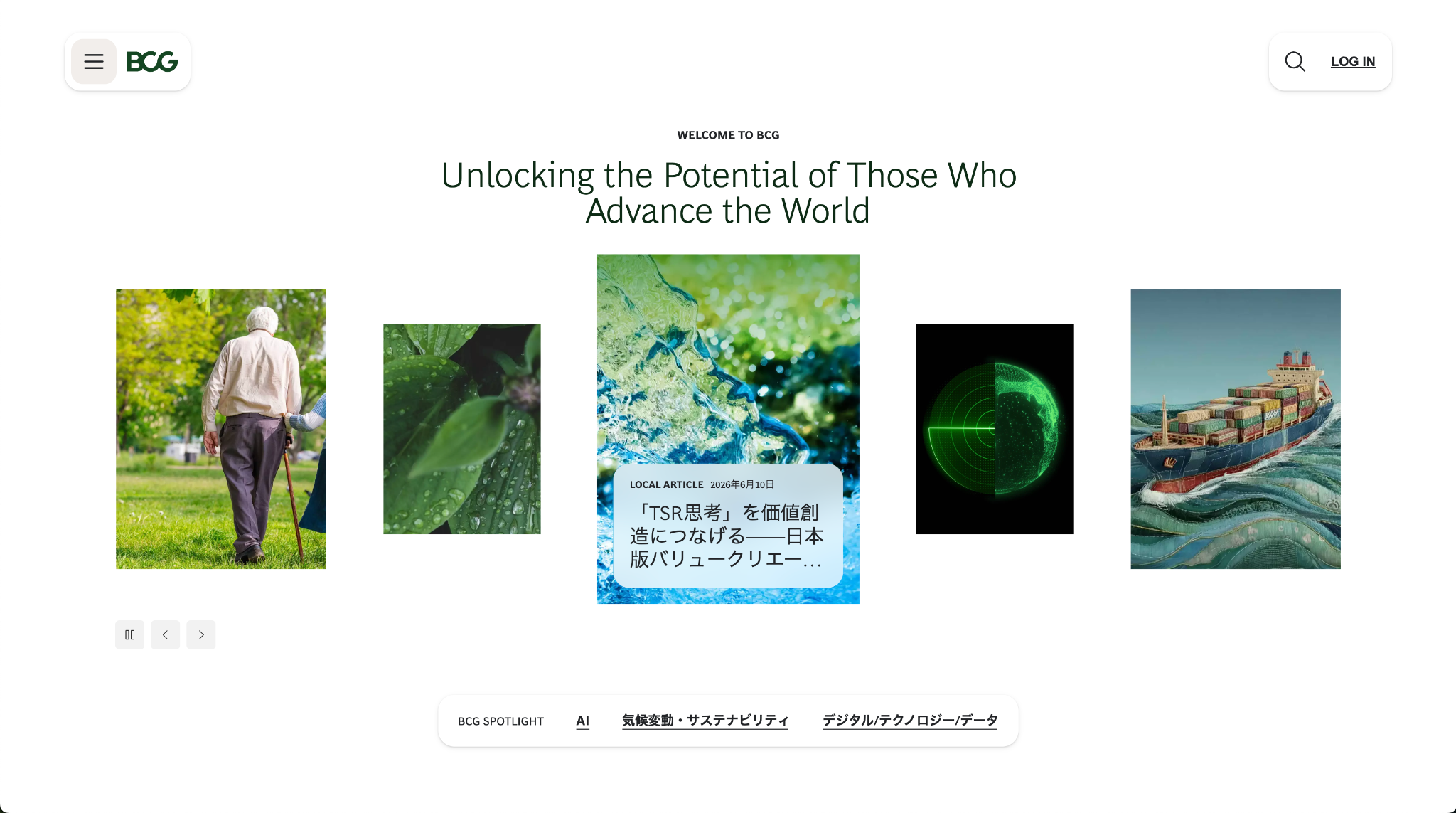
Boston Consulting Group LLC is a leading global strategy firm and a key member of the MBB (Metropolitan Budget, British Big Four). Founded in the United States in 1963, it boasts a network spanning over 100 cities in more than 50 countries worldwide.
We handle all aspects of management strategy consulting, and our strength lies in our ability to provide implementation support from both data analysis and organizational transformation perspectives. In the marketing field, we have a strong reputation for designing strategies from the upstream, utilizing global industry knowledge and advanced analytical methods.
Source:BCG Official Website(Capture, number of locations), as of July 2026
Representative company 2: PwC Consulting LLC
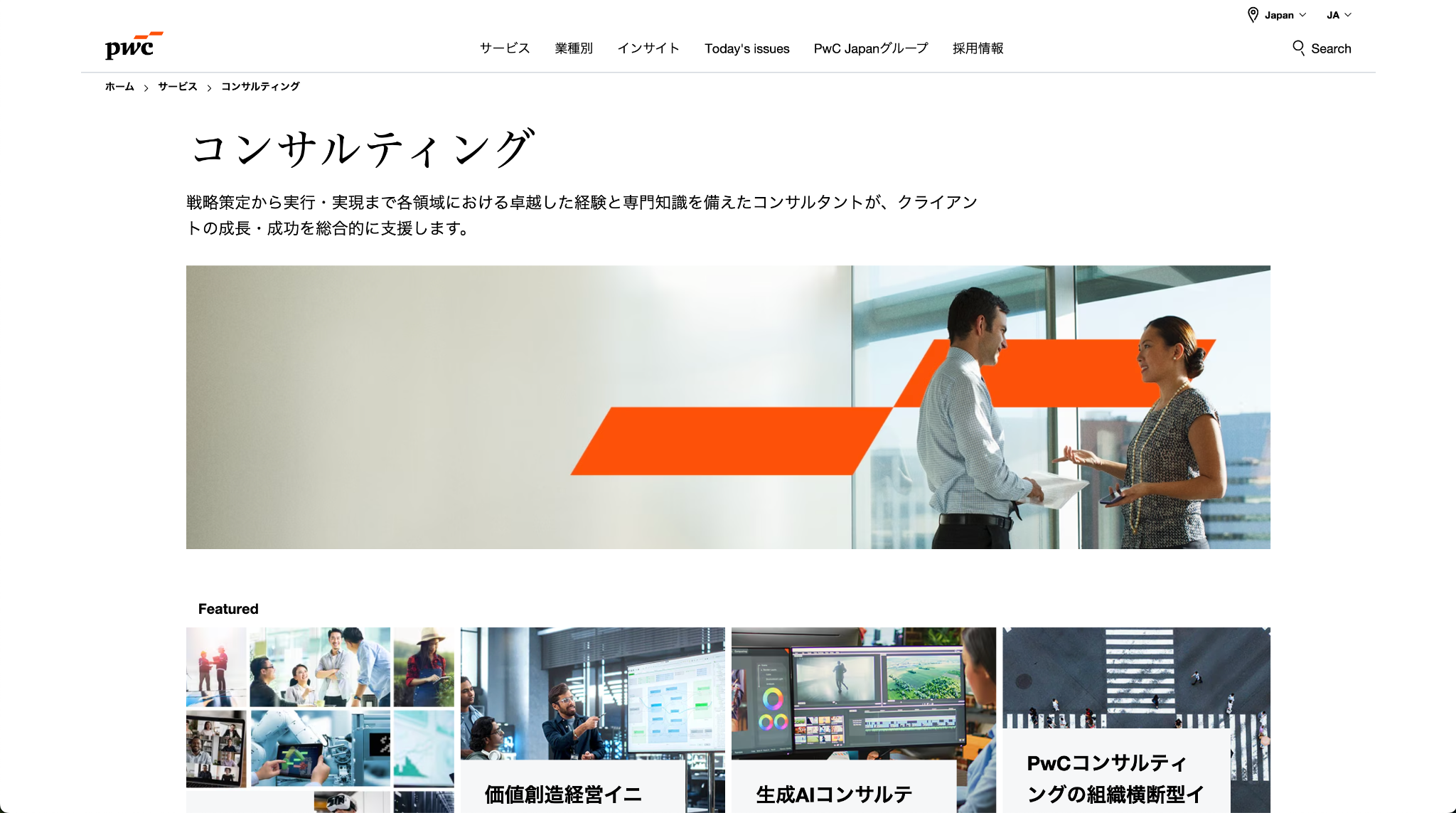
PwC Consulting LLC is the consulting arm of the PwC Group, one of the world's four largest accounting firms, and a comprehensive consulting firm that is part of the Big Four. Leveraging its global presence, it provides comprehensive capabilities across various industries and fields.
We cover a wide range of areas, from strategy formulation support and business process reform to digital transformation and risk management, and our distinguishing feature is our ability to handle everything from strategy planning to implementation support. We are particularly strong in both the digital domain and risk management, and excel at addressing complex management challenges.
Source:PwC Consulting LLC Official Website(Capture), as of July 2026
Representative company 3: Deloitte Tohmatsu LLC
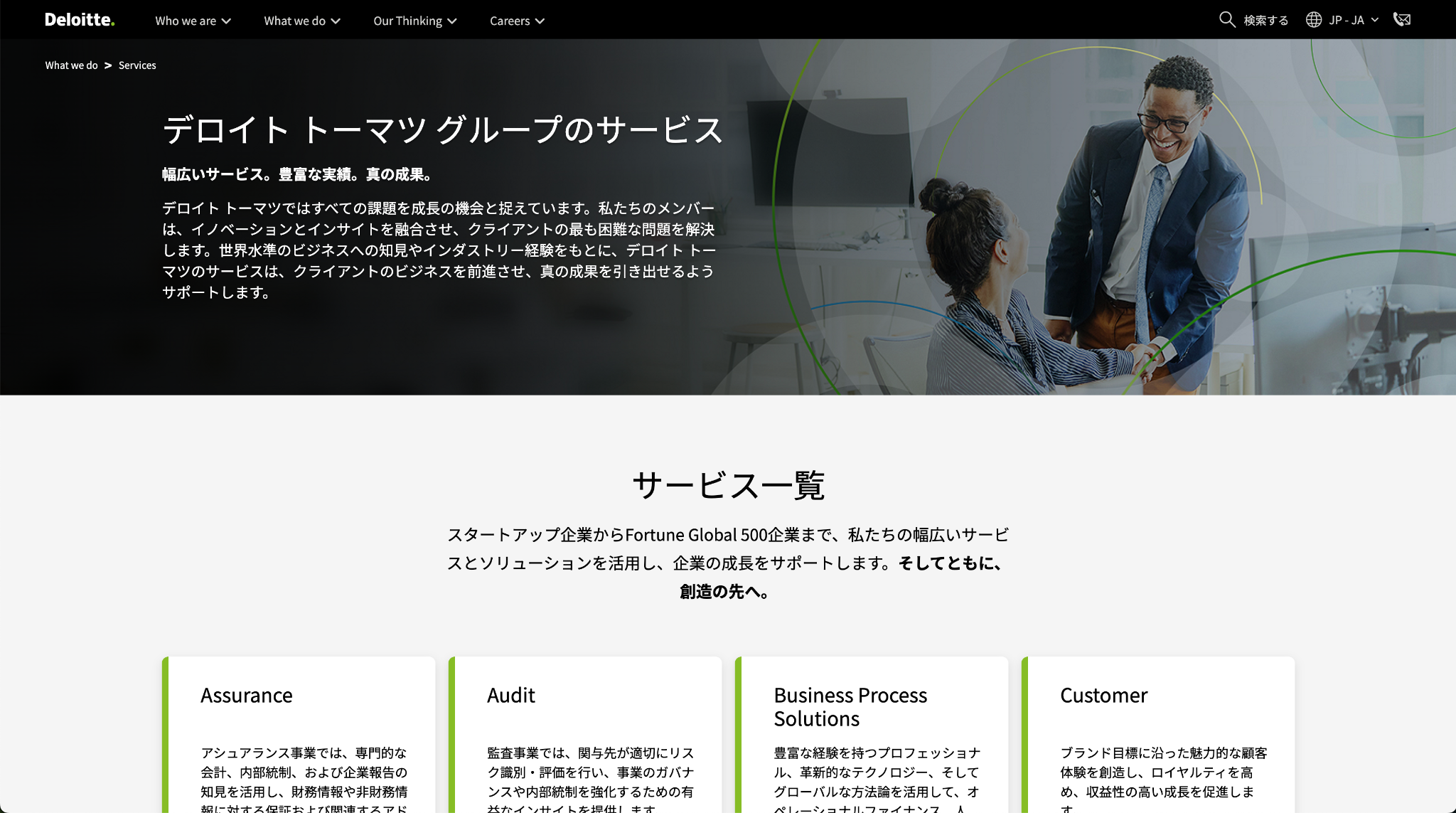
Deloitte Tohmatsu LLC is a full-service consulting firm that is one of the Big Four.
Deloitte Tohmatsu Consulting, established in April 1993, is the origin of our consulting business in Japan. In December 2025, we launched as a core corporation, and the entire group (including subsidiaries) supports clients with a staff of approximately 12,000 people.
In the marketing domain, the "Customer" department, which is responsible for customer touchpoints and marketing strategies, is comprised of three units: CS&D (Customer Strategy & Design), which handles customer strategy and experience design; M&C (Marketing & Commerce), which handles digital marketing and e-commerce; and S&S (Sales & Service), which handles sales and service transformation. This structure allows us to provide comprehensive support from strategy formulation to the digital domain.
Source:Deloitte Tohmatsu LLC Official Website(Capture, number of personnel), as of July 2026
5-2. [Advertising Agency Type] Advertising agencies that provide integrated support for media and creative services.
| Key challenges | • Strategy and advertising execution are disconnected. - Unable to design integrated campaigns across multiple media platforms. |
| Target company | Companies seeking overall marketing support, starting with optimizing their advertising investments. |
| Scope of support | We provide comprehensive support, from strategy planning to the acquisition and management of creative media. |
| Points to consider | Consulting fees and advertising commissions tend to get mixed up. It's important to separate and review the breakdown of costs. |
Marketing consulting services from advertising agencies typically involve providing comprehensive support for all aspects of marketing, from the initial stages, based on their expertise in planning, purchasing, and managing advertising media, as well as creative production.
Consulting firms established within the group of full-service advertising agencies, and specialized departments of advertising agencies with a strong focus on digital advertising, are typical players in this category.
The strength of this type of service lies in its ability to handle everything from strategy planning to advertising execution, creative work, and media buying.
As mentioned earlier, a disconnect between strategy and execution makes it difficult to achieve results. However, advertising agency-affiliated consultants can mobilize resources within their group to smoothly link everything from strategy to on-site production and operation.
In particular, their comprehensive capabilities prove invaluable in large-scale campaigns and projects involving integrated marketing communications.
Advertising agencies are particularly effective in the following types of companies:
- I would like support for my entire marketing strategy, starting with optimizing my advertising investments.
- I want to design an integrated campaign that spans multiple media channels.
- I want to integrate TV commercials, digital advertising, OOH (out-of-home advertising), PR, etc.
An advertising agency consultant with extensive experience in both media planning and creative aspects would be a strong option.
When considering this, it's especially important to keep in mind the relationship between your advertising budget and consulting fees.
In advertising agency-affiliated consulting firms, it is common for clients to incur fees (margins) related to the purchase and management of advertising media, in addition to the fees for strategic consulting.
Since consulting fees and advertising costs are mixed together, it is important to clearly separate and confirm "how much each service costs" when obtaining a quote.
Furthermore, the type of partner you should choose will depend on whether the support your company desires is "strategy planning-focused" or "integrated support including advertising execution." It's more practical to select a partner based on the following criteria:
- A comprehensive consulting firm with a diverse range of specialized companies within its group.
- An agency-based consulting firm specializing in the digital domain, with a focus on execution capabilities.
It's best to determine whether the request is for comprehensive, large-scale support or to strengthen implementation in a specific area before making a selection.
Representative company 1: Dentsu Consulting Inc.
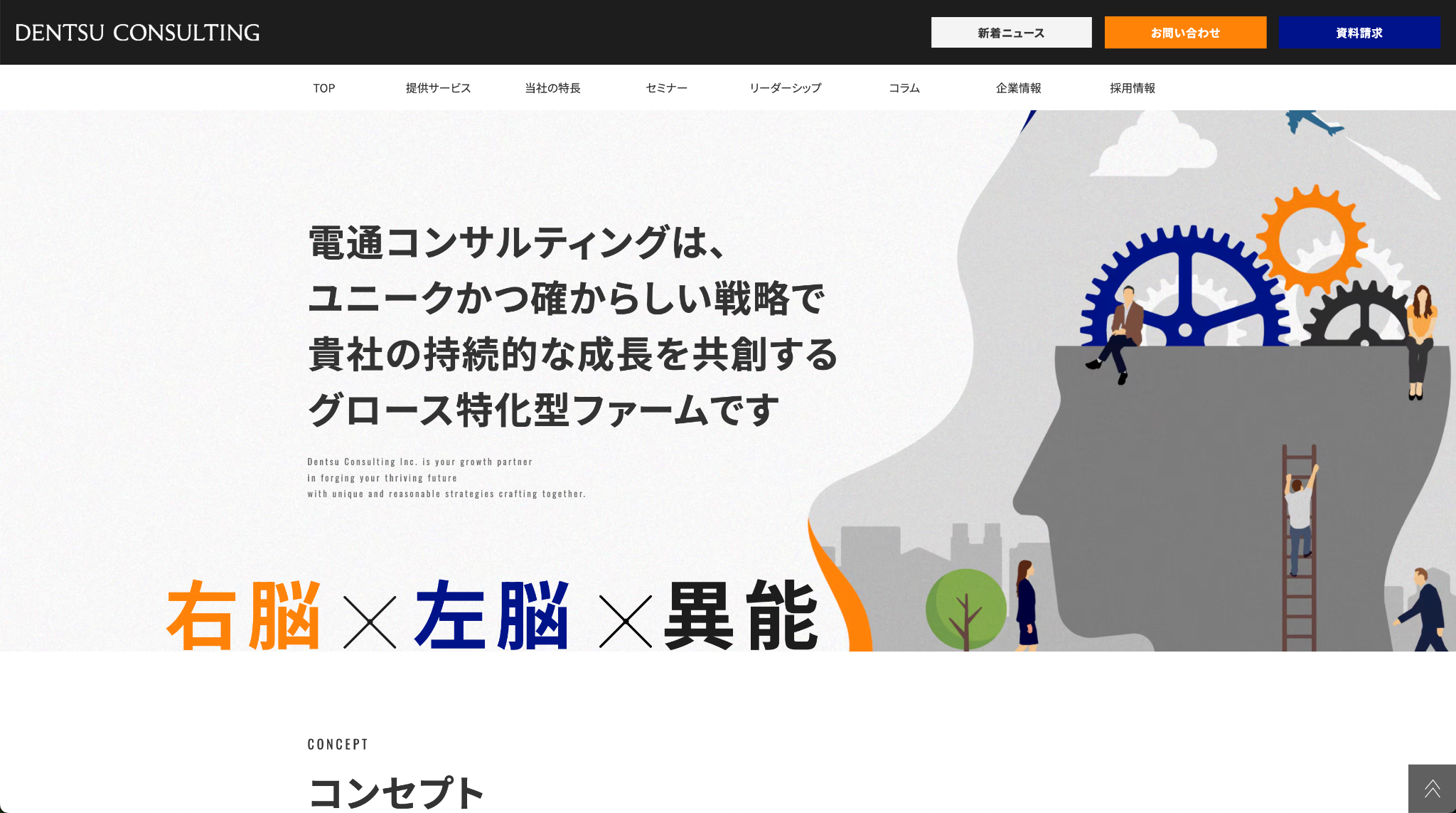
Dentsu Consulting Inc. is a consulting company established in 2006 as part of the Dentsu Group. Its strength lies in its ability to provide comprehensive support for marketing strategies, from the initial stages to the final stages, through collaboration with various Dentsu Group companies.
In addition to possessing a unique framework called "Marketing Strategy Key Points Diagnosis," our distinguishing feature is our ability to provide support not only in strategy planning but also in building and quickly establishing marketing organizations. We excel at integrated support by combining it with the media and creative functions of the Dentsu Group.
Source:Dentsu Consulting Inc. Official Website(Capture), as of July 2026
Representative company 2: Hakuhodo Consulting Inc.
Hakuhodo Consulting Inc. is a strategy and brand consulting company established in 2001 as a wholly owned subsidiary of the Hakuhodo Group.
Hakuhodo's strength lies in branding support based on its traditional philosophy of "consumer-centric thinking." A key feature is its ability to provide comprehensive support, from brand strategy development to HR branding (human resource strategy centered on the corporate brand). This makes it ideal for companies aiming for marketing transformation centered on brand value.
Source:Hakuhodo Consulting Inc. Official Website(Capture), as of July 2026
Representative company 3: ADK Marketing Solutions Inc.
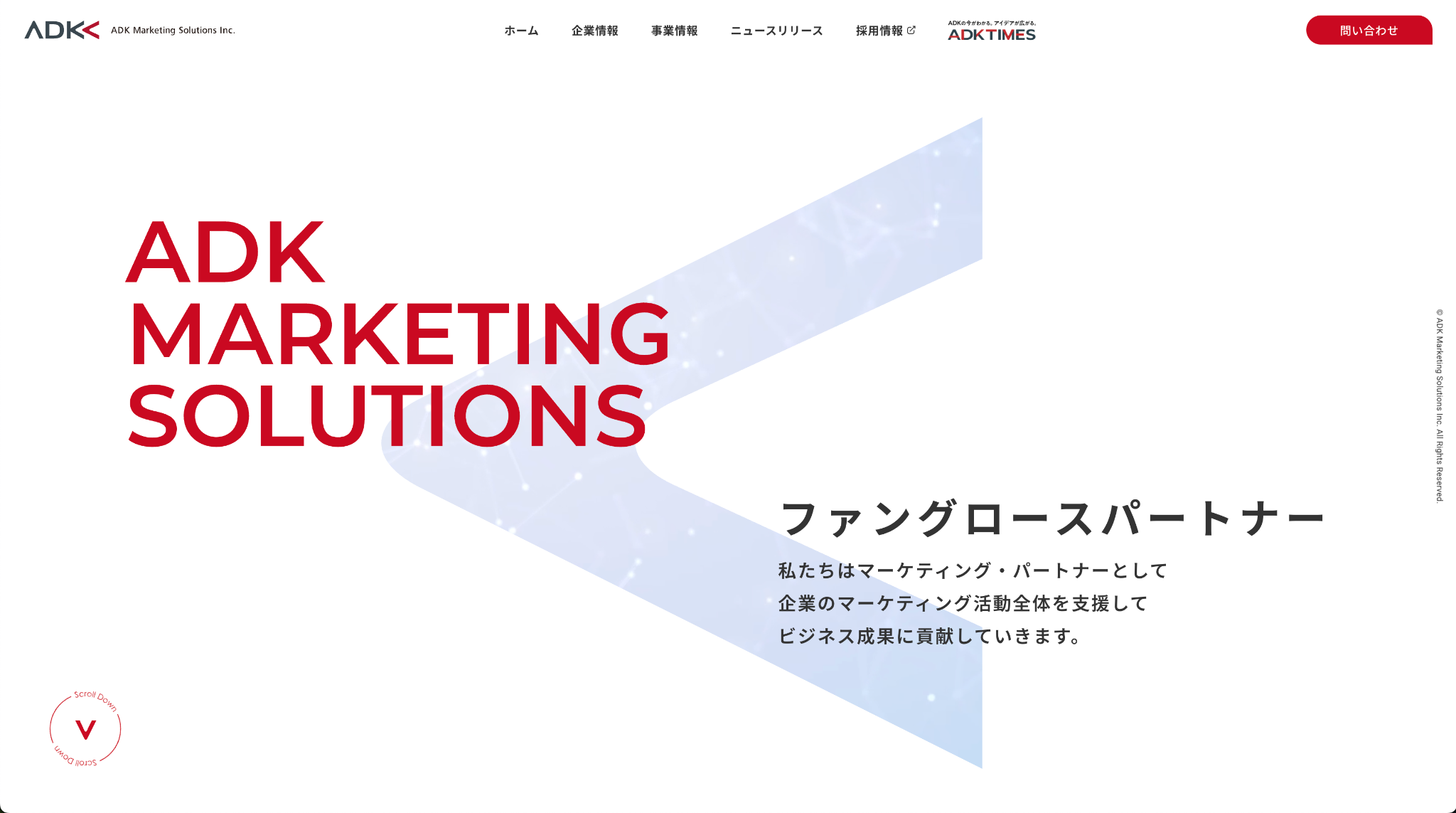
ADK Marketing Solutions Inc. is the core company of the ADK Group, which is the third largest full-service advertising agency in Japan after Dentsu and Hakuhodo. A long-established company with its origins in Asahi Tsushinsha, founded in 1956, it is currently undergoing a second phase of business transformation.
We comprehensively cover mass advertising, digital advertising, e-commerce, and CRM, and our strength lies in providing proposals and implementations that start with solving marketing challenges. We are also advancing data-driven marketing initiatives and have established a system to provide integrated support that transcends media boundaries.
Source:ADK Marketing Solutions Inc. Official Website(Capture), as of July 2026
5-3. [Digital Specialist] Digital marketing specialist with strong expertise in web, SEO, and performance-based advertising.
| Key challenges | - Web-based customer acquisition and conversions are not growing. - Improvements in performance-based advertising and SEO have plateaued. |
| Target company | Companies that want to strengthen their digital channels in the medium to long term. |
| Scope of support | Execution and optimization of digital domains, including performance-based advertising, SEO, content, and analytics platforms. |
| Points to consider | Division of roles with the in-house team. Defining what to delegate and what to handle internally. |
Digital-focused marketing consulting is a type of service that provides support centered on expertise in the digital domain, such as web advertising, SEO, social media, and content marketing.
While the advertising agencies mentioned earlier have an integrated perspective that includes mass advertising, digital-focused agencies place emphasis on "optimizing marketing activities centered on the web."
This type of consulting firm is well-versed in digital channel-specific operations, such as tuning performance-based advertising, improving SEO rankings, establishing content creation systems, and developing data analysis infrastructure.
Our strength lies in the depth of practical knowledge we've accumulated on the ground, including digital advertising bidding logic, search algorithm trends, and know-how for utilizing various SaaS tools.
This is suitable for companies facing the following challenges:
- We want to strengthen our digital channels in the medium to long term.
- We are facing challenges in attracting customers and improving conversion rates via the web.
- We want to increase organic search traffic and streamline our online customer acquisition process for SaaS.
They will be your partner in proposing concrete strategies and operational structures to address themes such as optimizing advertising investments, increasing organic search traffic to your website, and improving your online customer acquisition funnel.
When considering this, it's important to keep in mind how to divide roles with the in-house development team.
Many companies have in-house operations staff in the digital domain, so drawing the line between what to outsource to consulting firms and what to handle in-house directly impacts results. Here are some examples of how roles can be divided:
- We outsource strategy planning and operational policy design to consultants, while our in-house team handles day-to-day operations.
- We will outsource the operation itself while simultaneously developing internal talent.
It is crucial to design your relationship with a consulting firm based on your company's digital talent situation and the organizational capabilities you aim to achieve over a 3-5 year timeframe. During negotiations, discussing aspects such as "to what extent can you support in-house development?" and "which areas are best suited for outsourcing given our current internal structure?" will help prevent gaps once you enter the operational phase.
Representative company 1: Opt Co., Ltd.
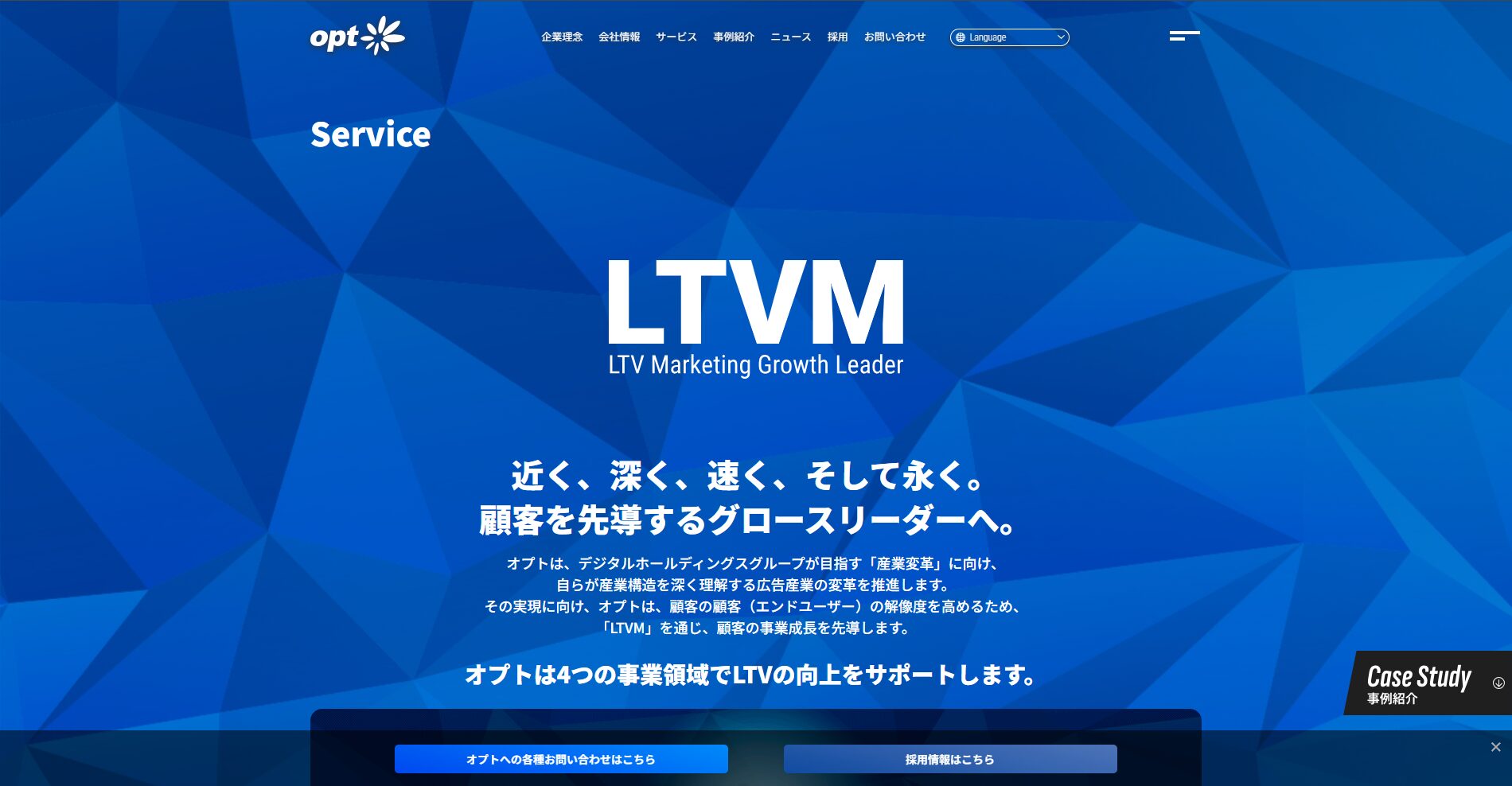
Opt Inc. is one of the leading companies specializing in digital marketing. Its predecessor was founded in 1994, and the current company was established in 2015. Since December 2025, it has been a consolidated subsidiary of Hakuhodo DY Holdings, playing a key role in the group's digital marketing structure.
With a focus on digital advertising operations and marketing solutions, and leveraging its proprietary digital marketing platform "ONE's Data," the company supports data measurement, integration, and utilization under cookie restrictions. It is a strong candidate for companies seeking comprehensive coverage across the entire digital domain.
Source:Opt Co., Ltd. Official Website(Capture), as of July 2026
Representative company 2: PLAN-B Co., Ltd.
PLAN-B Co., Ltd. is a digital marketing company established in 2003. Its core business is providing digital marketing support centered on SEO and web advertising, and its strengths lie in results-oriented operations and rapid improvement proposals.
A key feature is our ability to cater to a wide range of clients, from small and medium-sized enterprises to large corporations, and we can build a flexible support system tailored to each company's business phase. We also focus on in-house marketing support and talent development, making us a good fit for companies considering internalization.
Source:PLAN-B Co., Ltd. Official Website(Capture), as of July 2026
Representative company 3: Nile Co., Ltd.
Nile Co., Ltd. is a digital marketing company established in 2007, known as a leading company in the SEO industry. To date, it has supported over 2,000 B2B and B2C companies.
While focusing on SEO and content marketing, we have recently expanded our services to include marketing support utilizing AI-generated content. We are ideal for companies that want to seriously strengthen their marketing strategies starting with search traffic.
Source:Nile Official Website(Capture, number of companies supported), as of July 2026
5-4. [Research-related] Research and survey data companies specializing in market research and consumer research.
| Key challenges | - The actual market size and customer needs are unclear. - Lack of data to make informed decisions |
| Target company | Companies that need to make data-driven decisions, such as new product development and market entry decisions. |
| Scope of support | Design and implementation of quantitative and qualitative research, and strategic recommendations based on collected data. |
| Points to consider | The proper use of quantitative and qualitative methods. Is the research designed to lead to strategic recommendations? |
Research-based marketing consulting specializes in proposing marketing strategies based on data collected through market research and consumer research.
This role involves uncovering, through research, the starting point for marketing activities, such as "What do our customers want?" and "What needs exist in the market?"
This type of consulting firm uses a combination of research methods to address business challenges, including large-scale quantitative research utilizing consumer panels and internet surveys, qualitative research such as user interviews and focus groups, and analysis of purchase and behavioral data.
This type of approach excels at providing data-driven evidence for topics such as verifying market needs for new products, measuring awareness and evaluation of existing brands, and conducting comparative analyses with competitors.
In particular, this type of person is reliable in the following situations:
- We are considering entering a new category, but we don't have a clear understanding of the market size or actual customer needs.
- We are considering repositioning our existing brands and want to accurately understand consumer perceptions.
- We want to use data as a starting point for new product development and market entry decisions.
This is where the research design capabilities of research consultants come into play.
When considering your approach, it's important to keep in mind how to use quantitative and qualitative research appropriately. Each method excels in different areas.
- Quantitative research: Useful for understanding overall market trends and facts that can be expressed numerically. Effective for estimating market size and comparing purchasing intentions by segment.
- Qualitative research: Delving into "why people think that way" and "what psychological factors are behind it." Effective for understanding consumer insights that are difficult to capture numerically.
Excellent research consultants propose a design that appropriately combines both methods depending on the objective, capturing the overall picture quantitatively while interpreting the underlying context qualitatively.
During business negotiations, confirming "which research methodologies are proposed to address your company's challenges" and "how the collected data will be incorporated into strategic recommendations" will help ensure that the research doesn't end up being merely data collection, but rather yields results that lead to decision-making.
Representative company 1: Intage Holdings Inc.
Intage Holdings Inc., founded in 1960, is one of Japan's largest marketing research companies. It specializes in research and analysis utilizing its own large-scale panel data and has extensive experience in the consumer goods and healthcare sectors.
We have established a system to support everything from market understanding to strategic recommendations by combining multiple data sources, such as purchasing data and internet surveys. Our strengths lie in our long-standing industry expertise and our ability to continuously track the market through our panel data.
Source:Intage Holdings Inc. Official Website(Capture), as of July 2026
Representative company 2: Macromill, Inc.
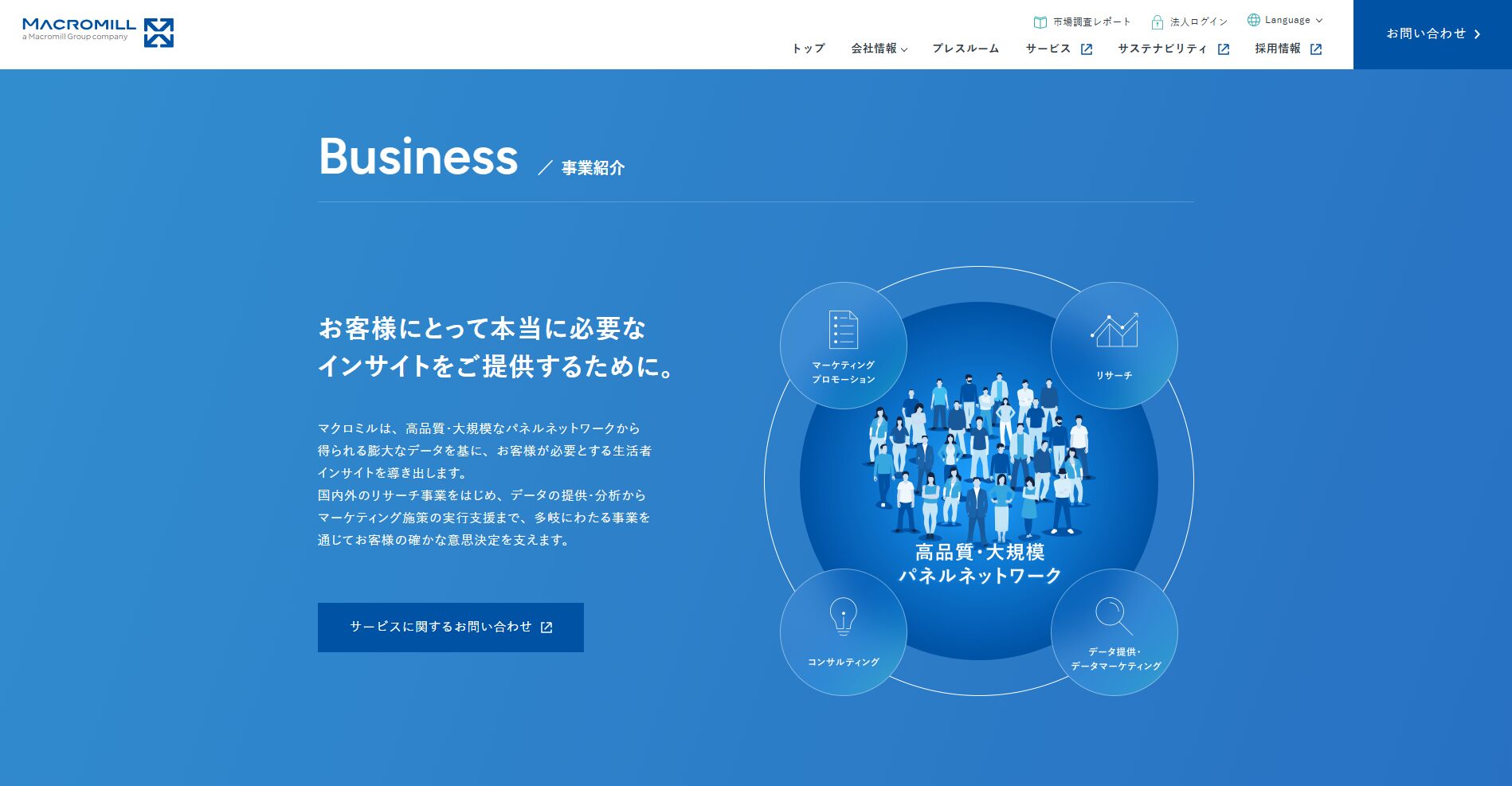
Macromill, Inc. is a marketing research company established in 2000. It possesses a proprietary panel of 130 million members, as well as a panel network of approximately 3,600 million members including partners. Known as a leading online research company, it excels at the speedy execution of quantitative research.
We employ an integrated approach that analyzes attitudinal data, behavioral data, and purchasing data, enabling us to extract insights from both consumers' "thoughts" and "actual actions." This is an ideal option for companies that want to conduct large-scale research in a short period of time.
Source:Macromill Official Website(Capture, number of panels), as of July 2026
Representative company 3: Cross Marketing Inc.
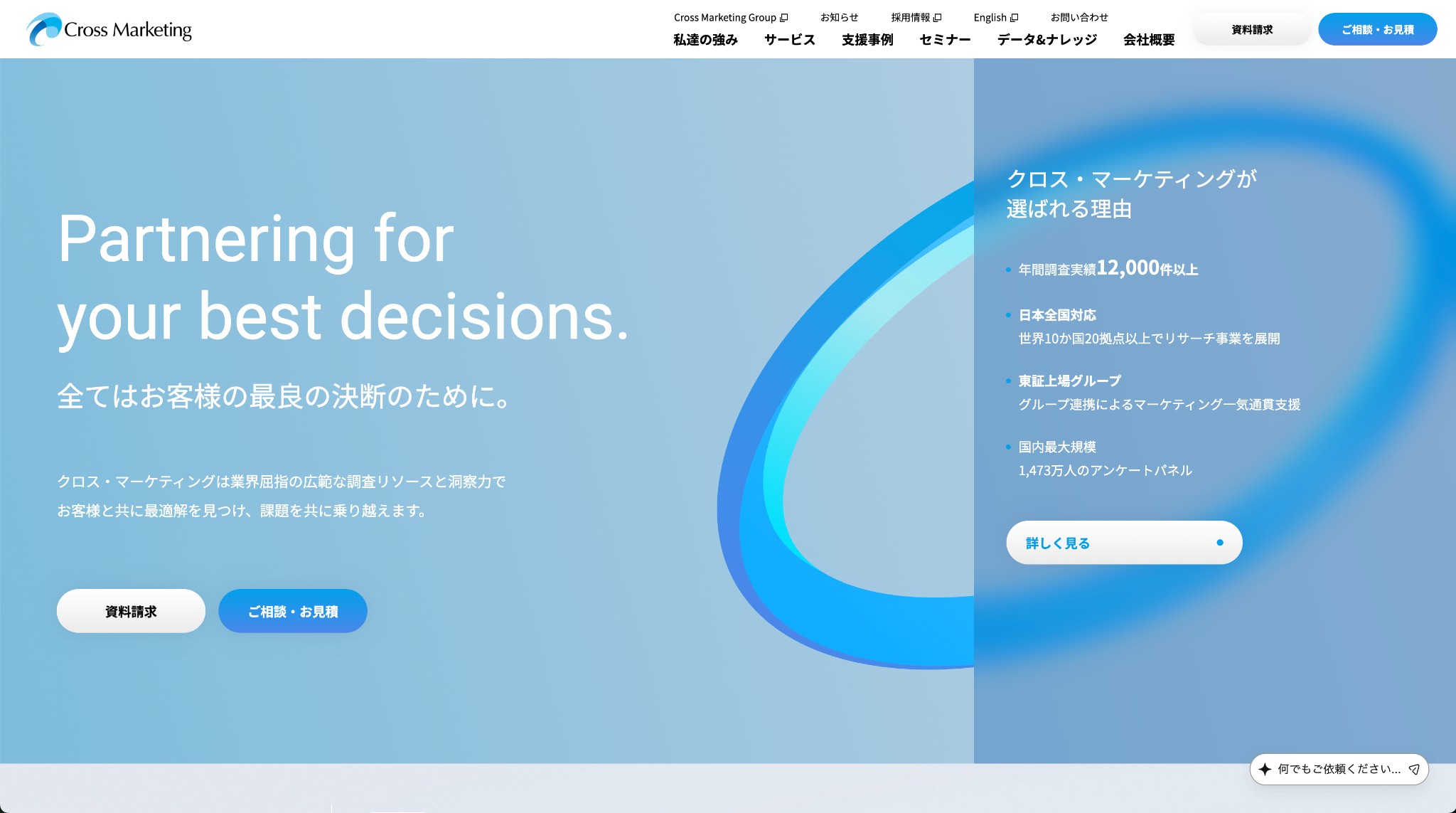
Cross Marketing Inc. is a marketing research company established in 2003, and plays a central role in the research functions of the Cross Marketing Group, which is listed on the Tokyo Stock Exchange. It boasts a track record of conducting over 12,000 research projects annually.
Leveraging a network of over 20 locations in 10 countries worldwide, we offer global research services, enabling us to meet the research needs of overseas markets. We also operate a data marketing business, and can handle requests that encompass everything from research to implementation support.
Source:Cross Marketing Official Website(Capture, research results and number of locations), as of July 2026
5-5. [B2B Specialized] B2B/MA Specialists with strong expertise in corporate marketing.
| Key challenges | Leads can be generated, but they don't turn into deals. - Weak collaboration between sales and marketing - Not fully utilizing marketing automation tools |
| Target company | Companies aiming to improve lead generation and conversion rates in B2B businesses, and companies dealing with SaaS and IT products. |
| Scope of support | Process design from lead generation to deal conversion and order fulfillment, and support for the implementation and operation of marketing automation (MA) tools. |
| Points to consider | The relationship with MA tool selection. Can we avoid being biased towards a specific vendor and delve into operational design? |
B2B-focused marketing consulting is a type of consulting that specializes in the marketing challenges unique to corporate-facing businesses.
Business-to-business (B2C) transactions have a unique process involving a long consideration period, the involvement of multiple decision-makers, and negotiations before reaching a contract. Therefore, they require specialized know-how that differs from B2C transactions.
This type of consulting firm excels at designing the entire process from lead generation and nurturing to inside sales, deal conversion, and order fulfillment, as well as providing support for the implementation and operation of marketing automation (MA) tools that support this process.
This type of company excels at accumulating expertise in integrating corporate sales and marketing, including designing collaborations with sales departments and refining KPI design.
The following are the types of companies we would like to consider requesting our services from:
- We aim to improve lead generation and conversion rates in our B2B business.
- We want to improve our online customer acquisition channels for SaaS and IT products.
- We are not making full use of the MA tools that we have already implemented.
In particular, for challenges such as "we're generating a lot of leads, but they're not turning into deals" or "sales and marketing aren't coordinating well," B2B-specific support tends to yield better results than general consulting.
When considering this, the relationship with the selection of an MA tool is particularly important.
The market offers a variety of marketing automation (MA) tools, including Marketo, HubSpot, Salesforce Marketing Cloud, and SATORI, each with its own strengths and operational requirements. Since some consulting firms have close relationships with specific vendors, it's a good idea to confirm the following points before engaging their services.
- Can we consult with you from the stage of selecting the most suitable tools for our company?
- Is it compatible with tools that have already been installed?
Keeping these points in mind will make it easier to create an optimal system while avoiding vendor lock-in to specific tools.
Furthermore, MA tools are merely the foundation for the system to function; results can only be achieved when they are accompanied by a well-designed team structure and operational framework for content and sales collaboration. To avoid the common mistake of "tool implementation becoming the goal itself," it is advisable to choose a partner who can work with you on operational design in parallel with tool selection.
Representative company 1: Sairyu Co., Ltd.
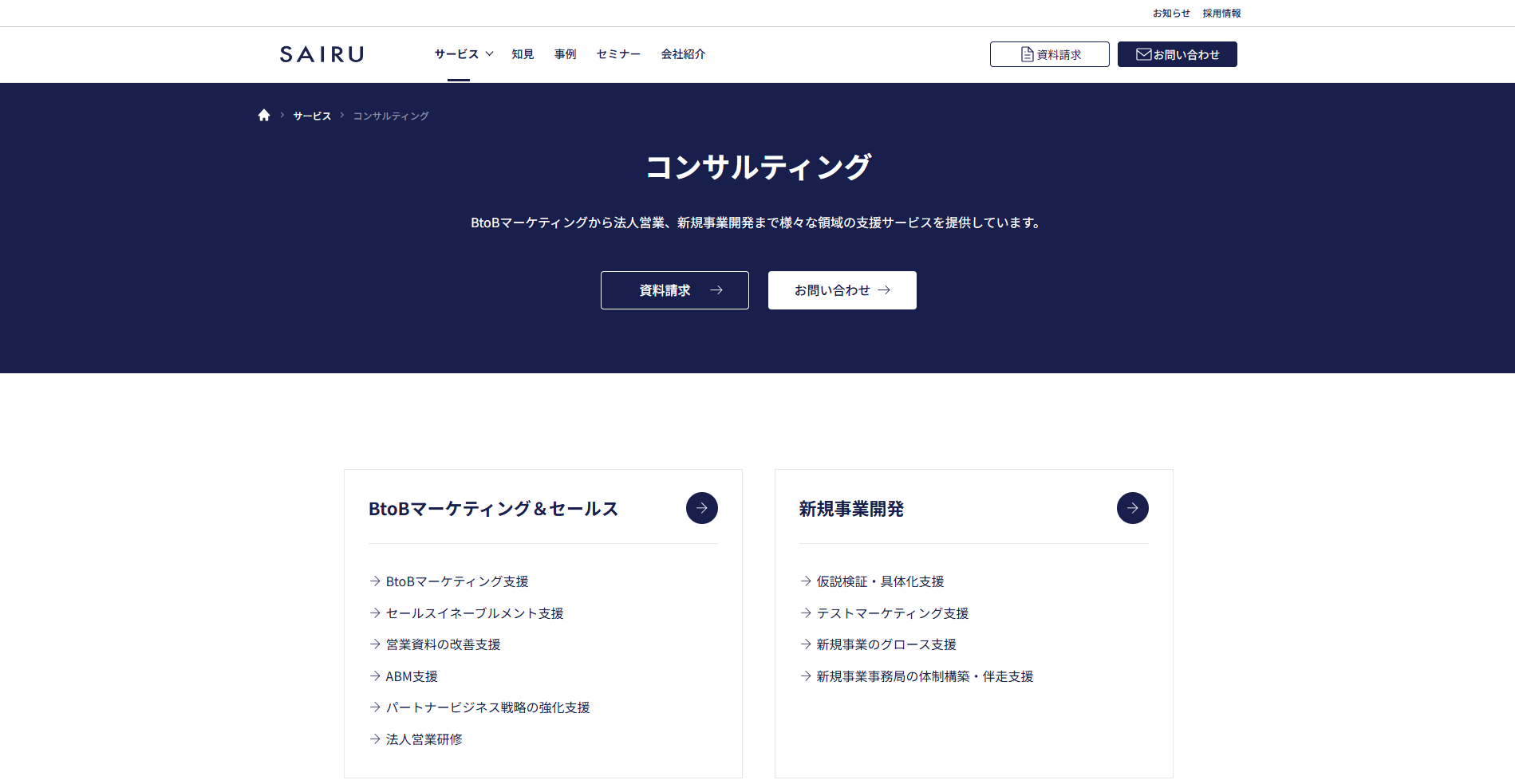
Sairu Co., Ltd. is a consulting company specializing in B2B marketing, established in 2016. We continuously develop and publish our own systematized B2B marketing methods, exceeding 100 implementations annually.
With extensive experience supporting the SaaS and IT industries, we handle a wide range of tasks, from launching marketing for new businesses to improving lead generation and conversion rates for existing businesses. We excel at assisting companies seeking B2B marketing support based on reproducible models.
Source:Sairyu Co., Ltd. Official Website(Capture), as of July 2026
Representative Company 2: Symphony Marketing Co., Ltd.
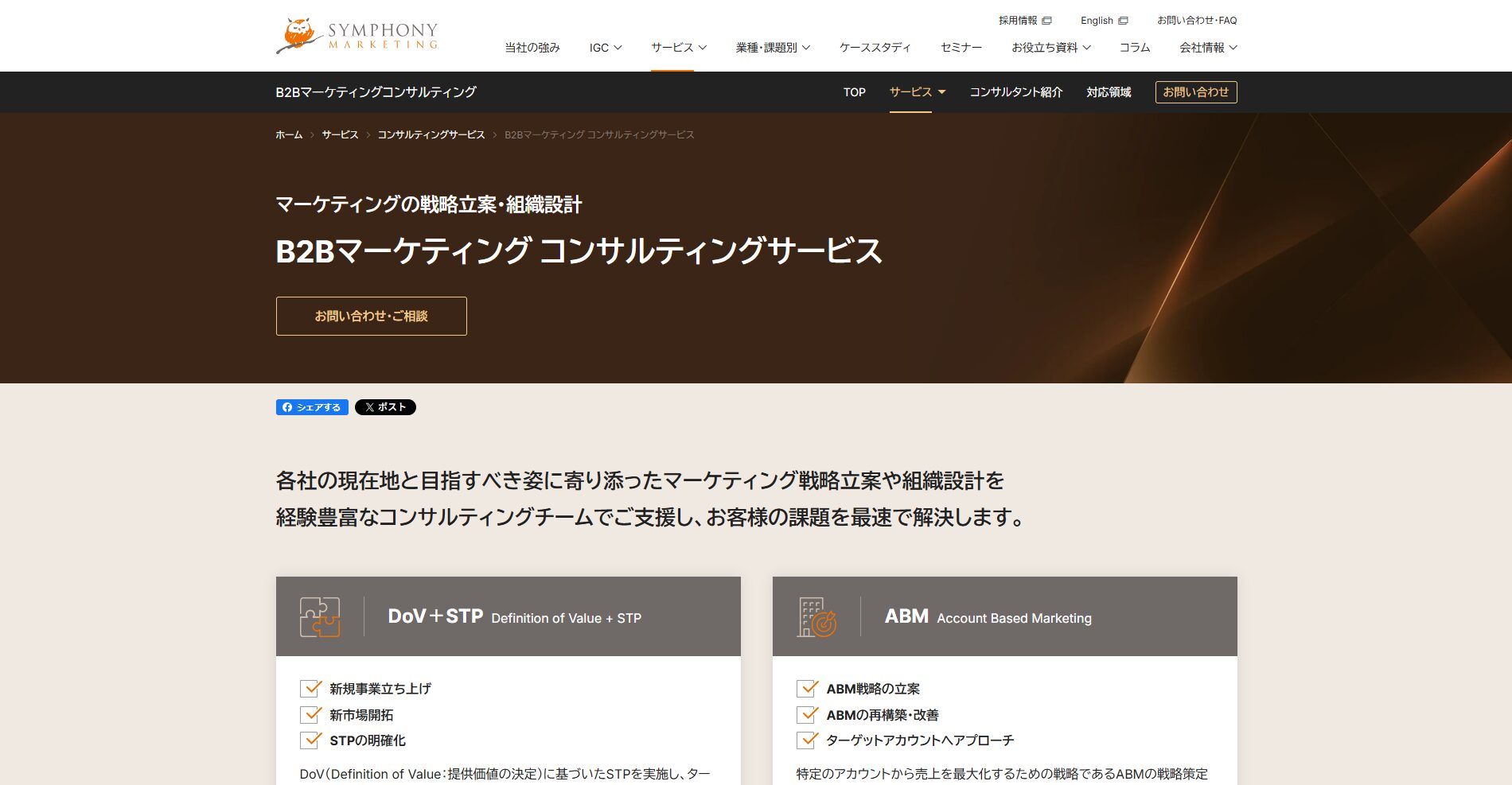
Symphony Marketing Co., Ltd. is a B2B marketing consulting company founded in 1990. With 35 years of experience in B2B marketing support, we have assisted over 600 companies to date.
Our MA (Marketing Automation) tools are designed to be multi-vendor compatible, meaning we are not biased towards any particular tool. This allows us to select and support the most suitable tool for each client. We are ideal for companies that value B2B marketing expertise and neutrality in tool selection.
Source:Symphony Marketing Official Website(Capture, number of companies supported), as of July 2026
Representative company 3: One Marketing Co., Ltd.
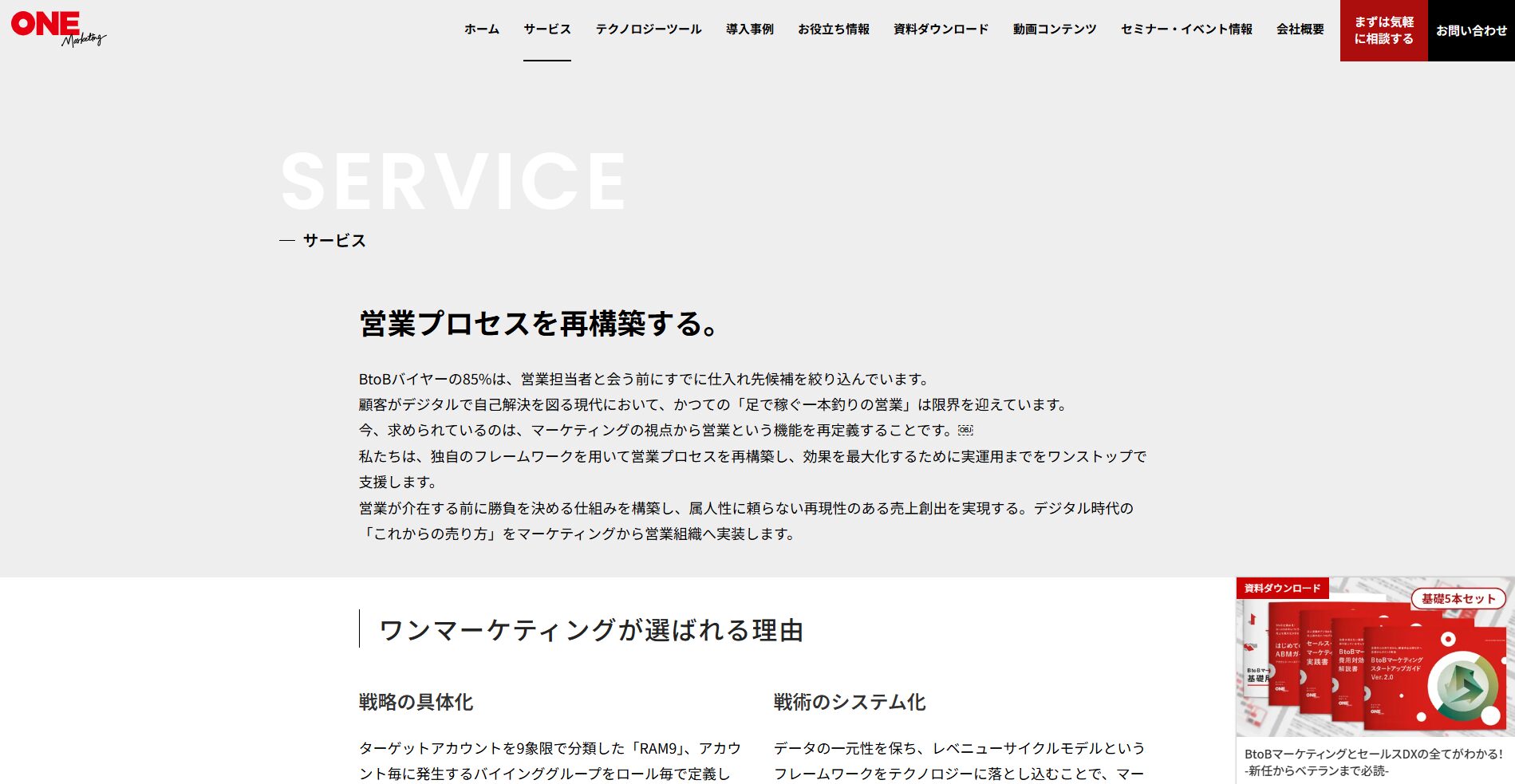
One Marketing Co., Ltd. is a long-established marketing company founded in 1973, and in recent years has focused its business on B2B marketing and MA (Marketing Automation) operation support. It particularly excels in the implementation and operation support of MA (Marketo, HubSpot, etc.) and Salesforce.
We value on-site, hands-on client communication and our distinguishing feature is our continuous support system that ensures tool implementation and successful adoption. This makes us ideal for companies that want to master MA and Salesforce to achieve results.
Source:One Marketing Co., Ltd. Official Website(Capture), as of July 2026
5-6. [PR-related] PR agencies specializing in branding and generating buzz.
| Key challenges | We want to gain recognition through methods other than advertising. We want to spread the brand in a reliable way through third-party communication. |
| Target company | Companies aiming to expand brand awareness and improve their image, and companies looking to strengthen their publicity-generating strategies. |
| Scope of support | Press releases, media relations, brand design, crisis management public relations, etc. |
| Points to consider | Designing integration with advertising strategies. Addressing regulations against stealth marketing when using influencers and affiliates together. |
PR-focused marketing consulting is a type of service that supports companies starting with "public relations and publicity," such as expanding brand awareness, improving image, shaping public opinion, and generating buzz.
Unlike advertising agencies that purchase ad space to deliver information, we aim to disseminate reliable information through third-party sources by engaging with media outlets and leveraging the natural spread of information in the age of social media.
This type of consulting firm covers a wide range of areas, including press release distribution, media relations, brand communication design, social media campaigns, and crisis communication.
Representative players are partners who can not only create buzz with one-off campaigns, but also provide support from a medium- to long-term perspective to cultivate the corporate brand.
This type of person is a good fit for companies with the following objectives:
- The aim is to expand brand awareness and improve brand image.
- When launching a new product or service, we want to gain recognition through methods other than advertising.
- We want to strengthen our strategies for generating buzz in the age of social media.
In particular, for products and services where "reviews from others" and "media coverage" influence purchasing decisions, PR strategies tend to be highly effective.
One thing to keep in mind when considering this is how it will be coordinated with advertising strategies.
Although PR and advertising differ in their objectives and methods, from the perspective of integrated marketing communications (IMC), their effectiveness is enhanced when they are closely coordinated.
For example, designing a coordinated strategy such as creating a wave of awareness through PR when a new product is launched, followed by stimulating demand through advertising, is one of the themes that PR consultants excel at. When negotiating, confirming "how to design the division of roles with advertising measures" and "how to establish a collaborative system with advertising agencies" will make it easier to improve the overall return on investment in marketing.
Furthermore, when using PR strategies, especially influencer marketing and affiliate marketing, it is necessary to pay attention to compliance with the regulations against stealth marketing under the Premiums and Representations Act (effective October 2023).
Choosing a partner with expertise in compliance, including the obligation to clearly indicate that something is an advertisement, is crucial for avoiding long-term brand damage risks.
Representative company 1: Vector Inc.
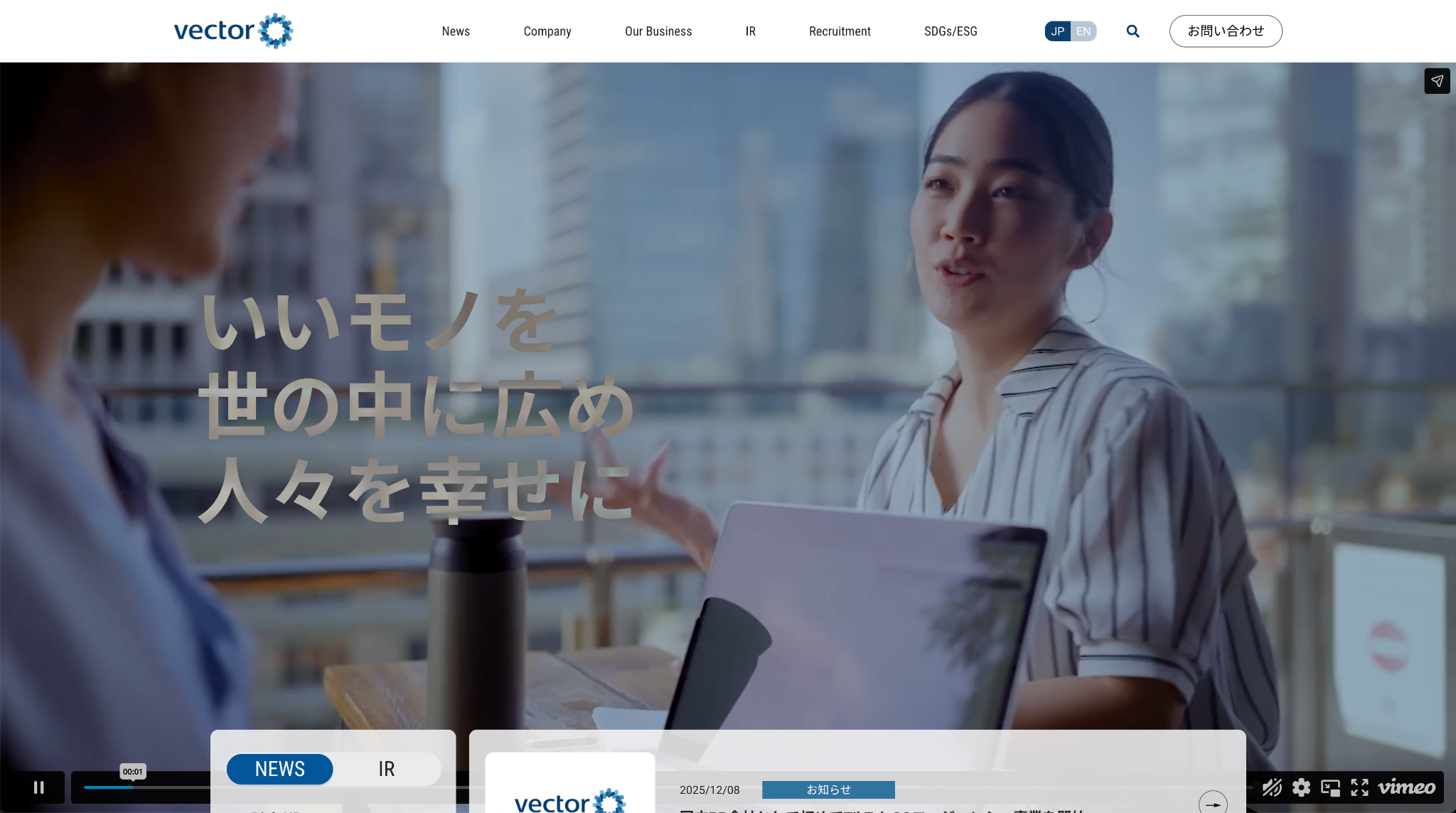
Vector Inc., established in 1993, is a company listed on the Tokyo Stock Exchange Prime and is known as the largest PR company in Japan. It is ranked No. 1 in Asia and No. 6 globally (2024) in the world PR agency rankings, and is a player with a significant presence on a global scale.
We handle a wide range of areas, from comprehensive PR to digital PR and social media marketing, and our group is characterized by having various specialized companies within it. We are a strong candidate for companies seeking large-scale integrated campaigns or strategies to generate buzz in the digital age.
Source:Vector official release(Capture, PR agency rankings and listing categories), as of July 2026
Representative company 2: Dentsu PR Consulting Inc.
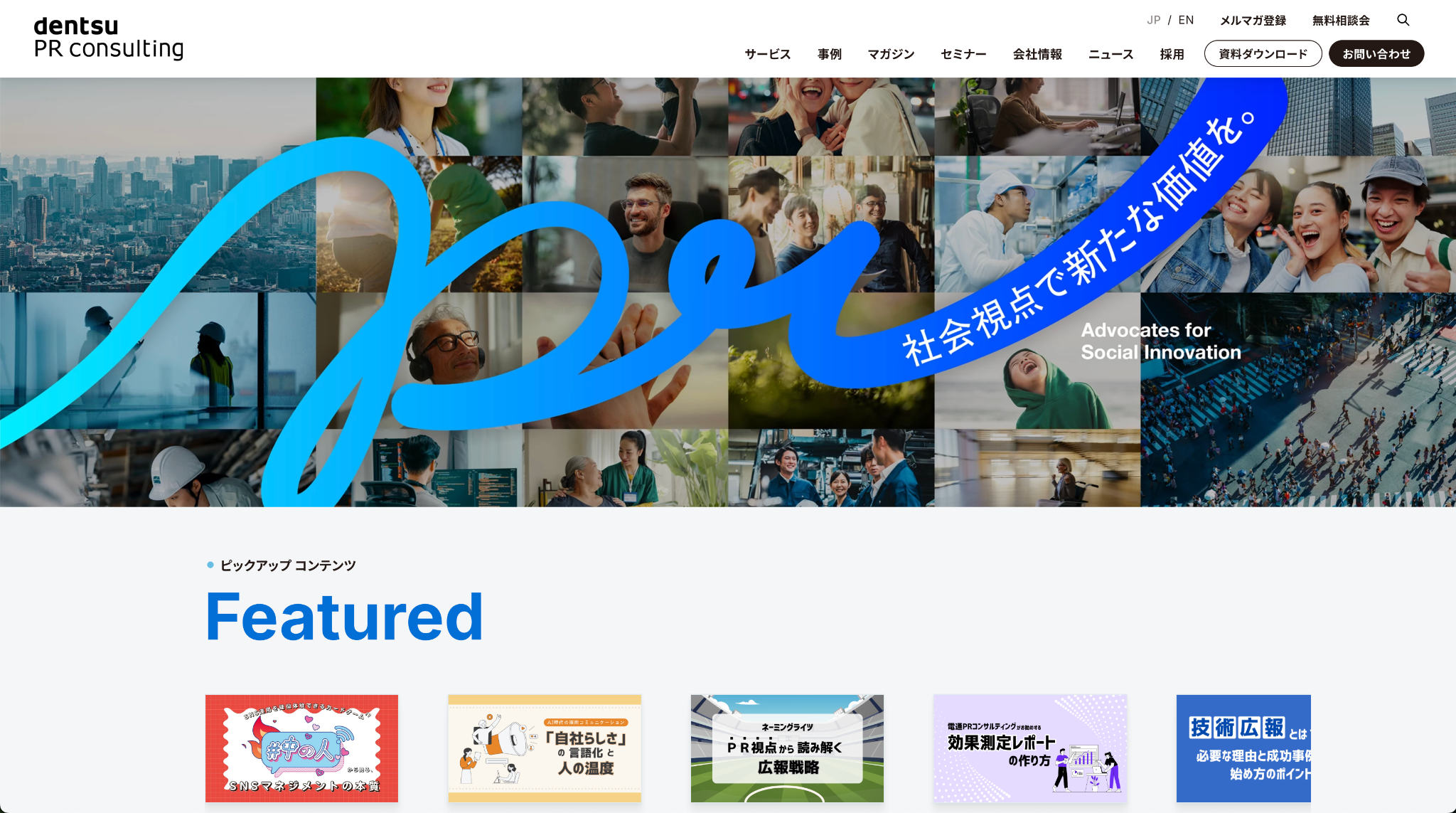
Dentsu PR Consulting Inc. is a PR specialist company of the Dentsu Group, founded in 1961. As one of the leading PR companies, it has accumulated many years of expertise in media relations.
We handle a wide range of services, from marketing PR to crisis communication and social innovation, and our strength lies in our ability to design integrated communications in collaboration with the advertising and creative functions of the Dentsu Group.
Source:Dentsu PR Consulting(Capture), as of July 2026
Representative company 3: PRAP Japan Inc.
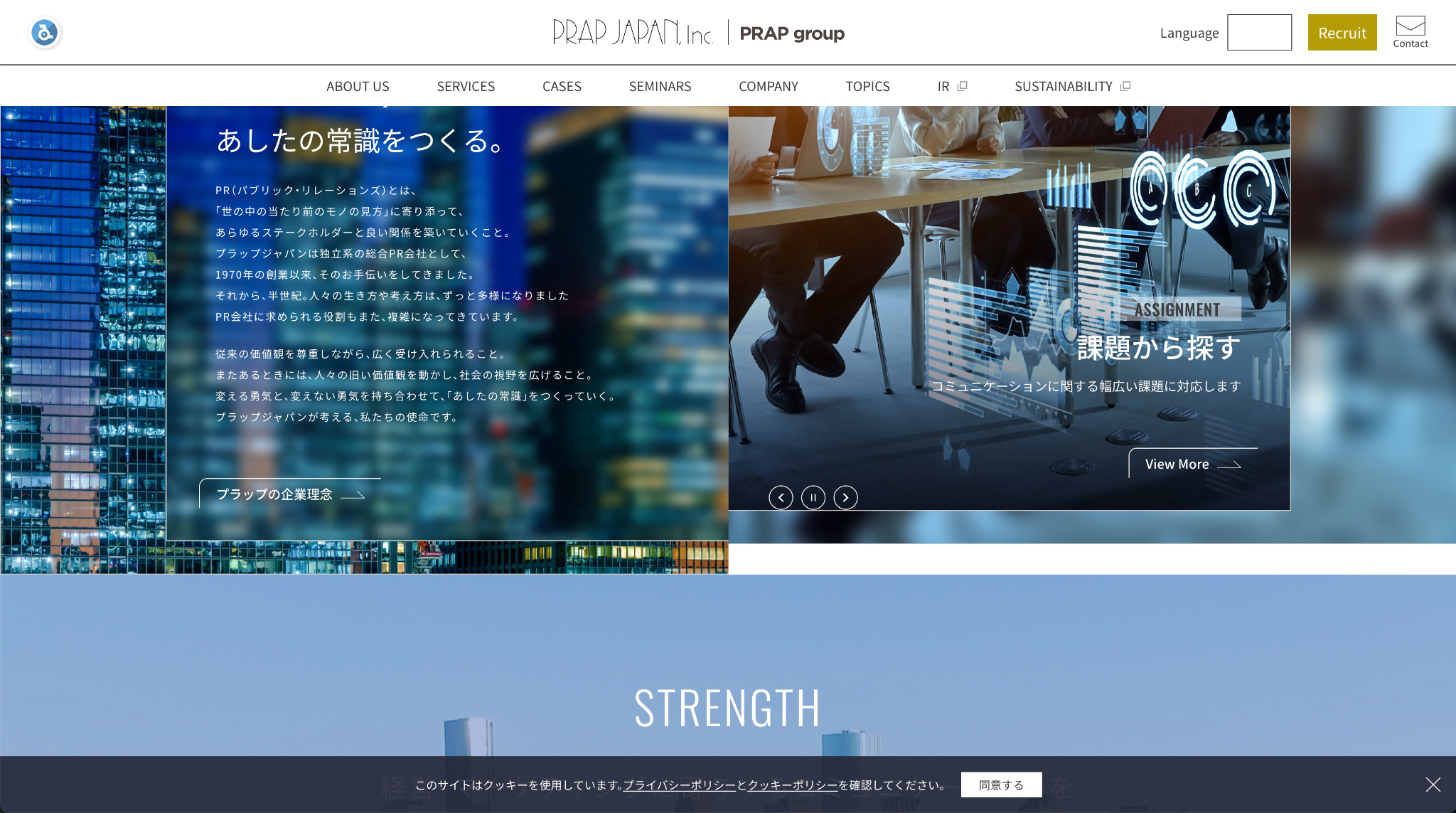
PRAP Japan Co., Ltd. is a long-established comprehensive PR company founded in 1970 and listed on the Tokyo Stock Exchange Standard. In addition to its many years of experience in PR support, the company focuses on PR design utilizing data analysis by its digital specialist team.
In addition to traditional public relations work, we have a strong track record in crisis management public relations, and our distinguishing feature is our ability to provide seamless support from building a brand during peacetime to responding to emergencies. We are well-suited for companies that want to cultivate their corporate brand over the medium to long term.
Source:PRAP Japan Official IR Site(Capture, listing classification), as of July 2026
5-7. [IT Consulting] IT consulting and system integrators with strong expertise in implementing CRM/CDP/MA systems.
| Key challenges | We want to promote large-scale digital transformation (DX) involving the implementation and renewal of CRM/CDP/MA. We want to standardize data utilization throughout the entire company. |
| Target company | Large and medium-sized companies promoting marketing DX with system implementation |
| Scope of support | We provide support from strategic recommendations to system construction and operation, involving IT departments and management. |
| Points to consider | Points to note during the system implementation phase: Can we support the project not only during implementation but also until it is fully operational and established in the field? |
IT consulting-based marketing consulting firms specialize in DX (Digital Transformation) projects that involve the implementation of marketing systems such as CRM, CDP, and MA.
Major think tanks, system integrators (SIers), and global comprehensive consulting firms are typical players, and they have the capability to provide one-stop services from strategic recommendations to system construction and operation.
This type of consulting firm can handle large-scale, system-integrated projects such as building customer data platforms (CDPs), revamping CRM systems, implementing marketing automation tools company-wide, and developing data analytics infrastructure.
The strength of this type of role lies in its ability to involve not only the marketing department, but also the information systems department and senior management, in order to establish a data utilization platform for the entire company.
The expected clients are companies such as the following:
- We want to promote large-scale digital transformation (DX) that involves the introduction and renewal of our marketing system.
- We want to proceed with system integration across multiple business units and group companies.
- We want to standardize data utilization at a company-wide level.
This type of comprehensive capability is particularly valuable in cases where large companies in sectors such as finance, telecommunications, and manufacturing need to advance marketing DX while integrating with existing systems and meeting stringent security requirements.
When considering a system, it's especially important to keep in mind the points to be aware of during the system implementation phase.
Implementing a marketing system involves a process that includes tool selection, requirements definition, development and construction, operational design, and internal adoption, so it's not uncommon for projects to last a year or more.
If requirements change midway through the process, or if the system doesn't match the actual workflow, the system that was built may end up never being used.
Therefore, when choosing an IT consulting firm, it is important to confirm the following points during negotiations.
- To what extent will they understand the operational requirements of the marketing side?
- Will they provide support until the system is fully implemented and established in the field?
Some consulting firms excel at system development but fail to delve into understanding the marketing department's operations or designing operational procedures. It is advisable to clearly define whether your company's challenge lies in "system implementation" or "post-implementation utilization" before choosing a partner.
Representative company 1: Nomura Research Institute, Ltd. (NRI)
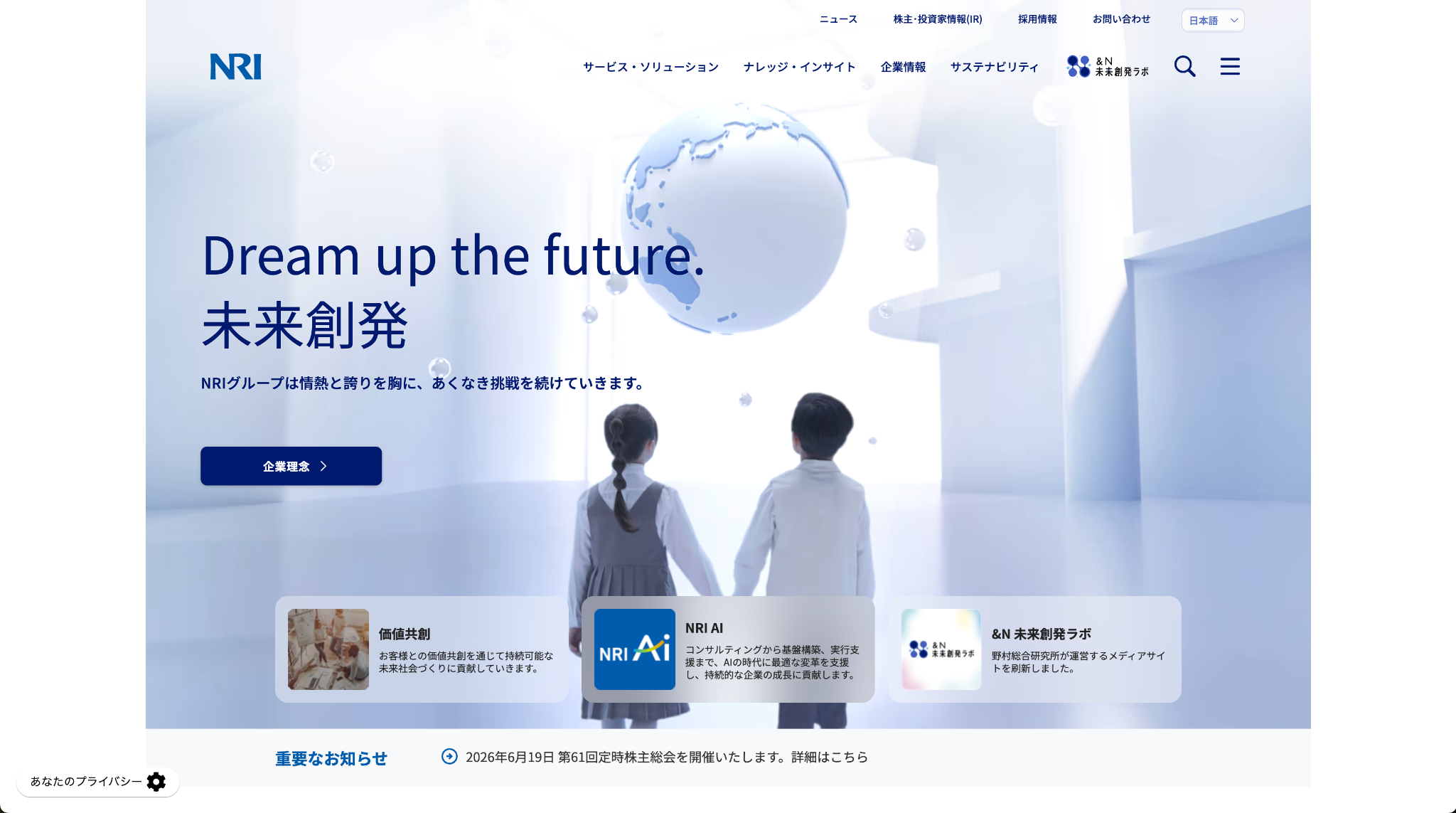
Nomura Research Institute, Ltd. (NRI), established in 1965, is Japan's largest think tank and system integrator. Its strength lies in its ability to provide a one-stop service, from strategic recommendations to system construction and operation, by combining the functions of both research/consulting and IT solutions divisions.
Known for its outstanding track record in the financial industry, the firm also excels at providing long-term strategic recommendations based on future forecasts and industry analysis. In the marketing field, it has a strong reputation for handling large-scale projects for major corporations, from the construction of CRM and data infrastructure to operational support.
Source:Nomura Research Institute, Ltd. (NRI) Official Website(Capture), as of July 2026
Representative company 2: NTT DATA Corporation
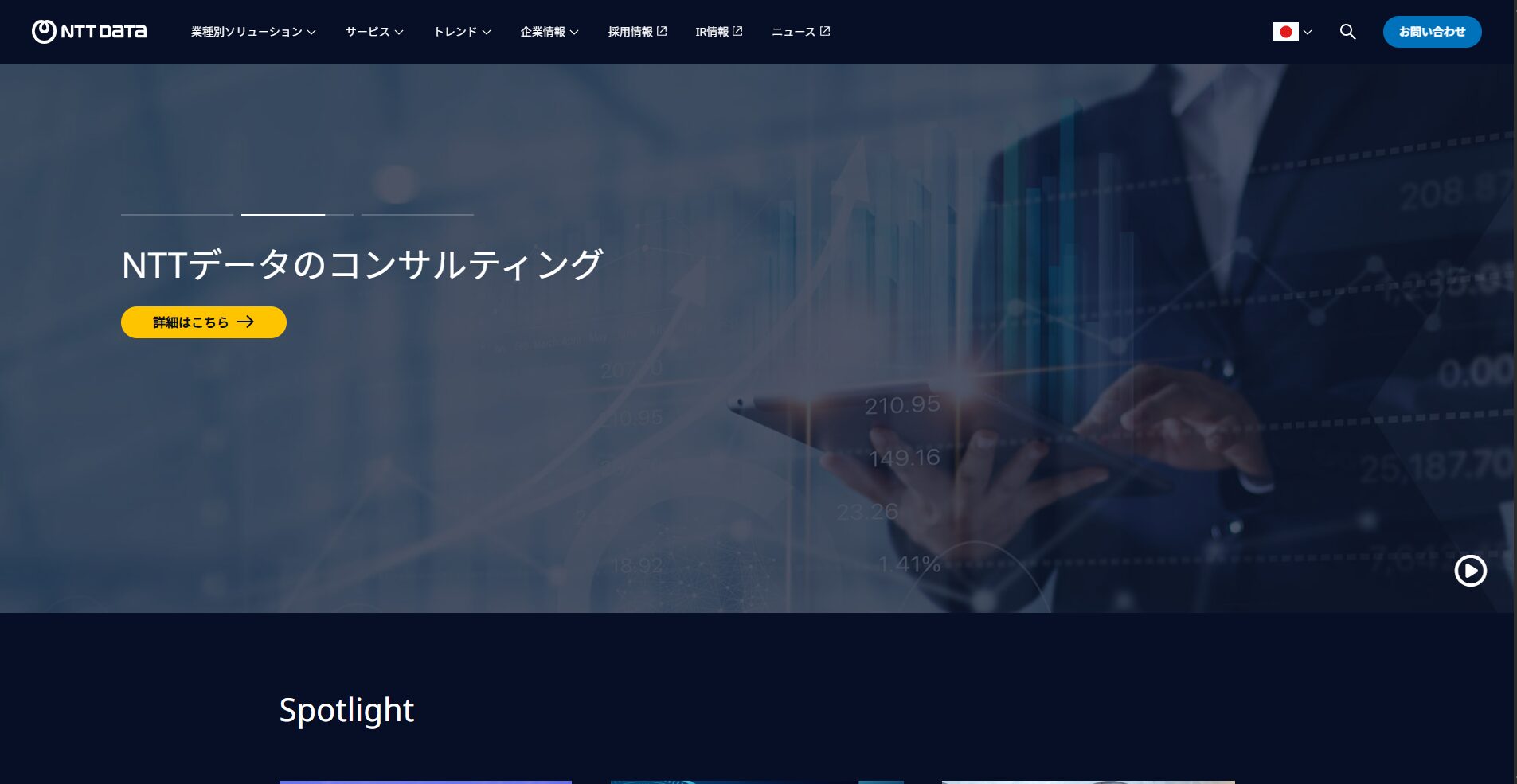
NTT DATA Corporation is Japan's largest system integrator, established in 1988. It boasts a track record of building social infrastructure-level systems and has accumulated many years of experience in large-scale system projects for government agencies, finance, telecommunications, and other sectors.
In recent years, we have been shifting from traditional contract development to a proposal-based business model, strengthening our DX consulting capabilities. In the marketing field, we are particularly strong in handling complex and large-scale DX projects, such as building large-scale customer data infrastructure and integrating systems across group companies.
Source:NTT DATA Corporation Official Website(Capture), as of July 2026
Representative company 3: Accenture Japan Ltd.
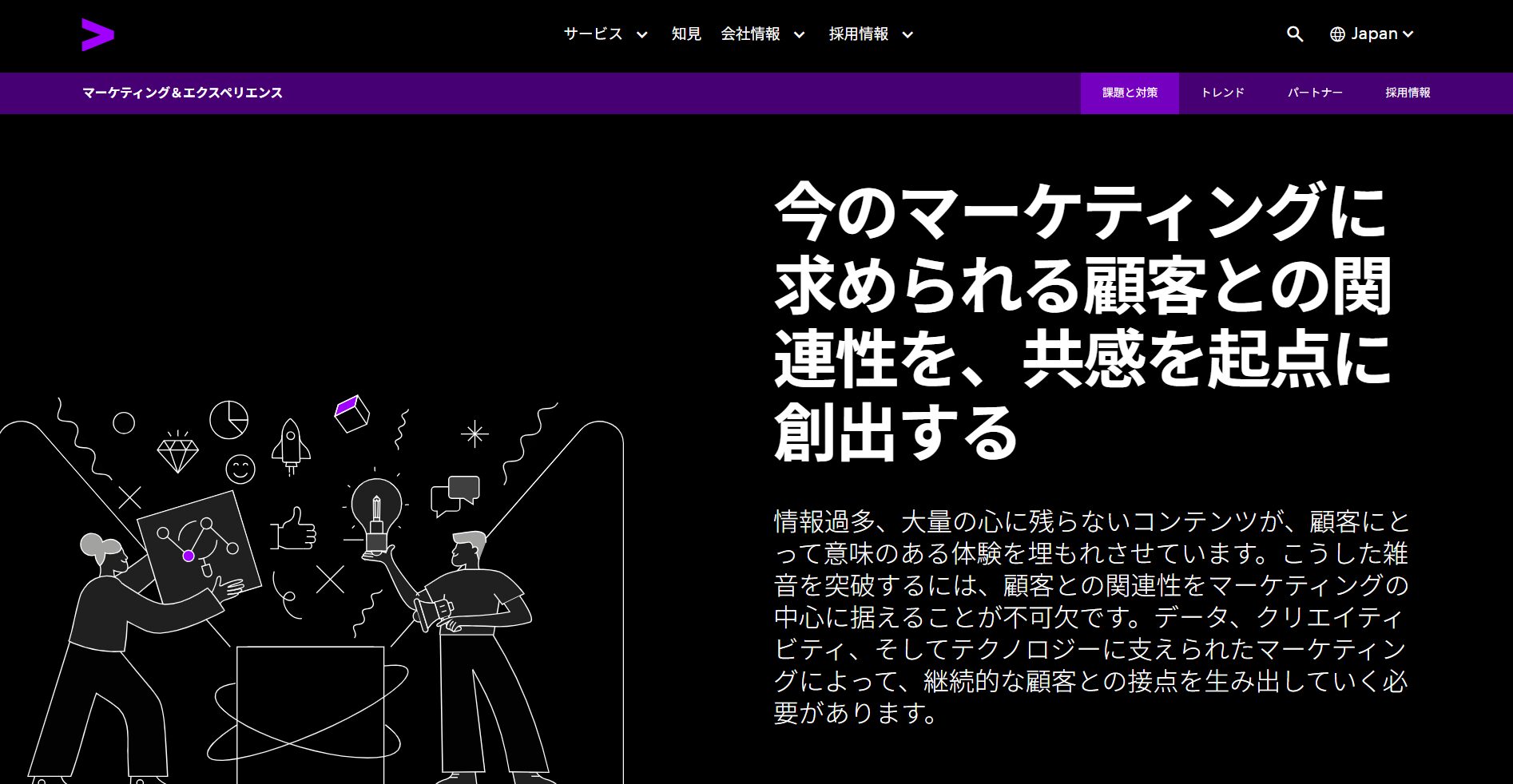
Accenture Japan Ltd., established in 1962 (with its Japanese subsidiary established in 1995), is one of the world's largest comprehensive consulting firms. Its distinguishing feature is its integrated provision of services across four areas: strategy, consulting, technology, and operations, enabling it to handle everything from upstream strategy formulation to downstream system implementation and operation.
In the marketing domain, we provide comprehensive support ranging from marketing DX to system implementation and data analysis platform construction, leveraging our global expertise and technology implementation capabilities to offer comprehensive assistance. We are a strong candidate for companies aiming for large-scale transformation projects.
Source:Accenture Japan Ltd. Official Website(Capture), as of July 2026
5-8. [Data Science] Specialized in supporting marketing decision-making through data science and data-driven approaches.
| Key challenges | We have the data, but we're not using it to make decisions. I want to move away from pricing, demand forecasting, and advertising investments that rely on intuition and experience. - Unable to develop sophisticated marketing strategies that integrate market data and customer behavior data. |
| Target company | Companies that possess customer data and purchase data and aim to optimize all aspects of the 4Ps and implement data-driven management. |
| Scope of support | Market analysis using statistical models and machine learning, calculation of price elasticity, demand forecasting, customer behavior modeling, ROI maximization, and advanced decision-making. |
| Points to consider | Matching the company's data preparation status with the support needed. |
Data science-based marketing consulting specializes in using data science techniques such as statistical models and machine learning to scientifically analyze and enhance marketing decision-making itself.
This is an area that has rapidly gained prominence in recent years as an option for companies that want to seriously promote "data-driven management" and "data-based marketing" and establish a competitive advantage.
This type of consulting firm doesn't simply provide analytical reports; it delivers outputs that directly impact decision-making for management and marketing leaders, such as visualizing advertising effectiveness, optimizing budget allocation, and modeling customer behavior. It's particularly well-suited for the following types of companies:
- We want to leverage data not only to optimize promotions, but also to transform the 4Ps, including pricing, product, and distribution.
- We want to fully promote data-driven management and build a common data infrastructure and predictive/simulation models for the organization.
- While we have a large amount of data on the market, customers, and results, we face challenges in translating that data into concrete business growth scenarios.
When considering a request for consulting services, a particularly important factor is matching your company's data management status with the services offered by the consulting firm. The appropriate approach will vary depending on the quantity and quality of data accumulated within the company, the presence or absence of a data infrastructure, and the types of KPIs that can be collected.
- If your data is not yet fully organized, you need a company that can support you from the design stage, including "what data to collect and how to collect it."
- A company with a certain level of foundation in place can move on to building analytical models and systematizing decision-making processes.
Furthermore, even within the data science field, each company specializes in different areas. Some companies excel at verifying the effectiveness of marketing and optimizing investments, others support CX (customer experience) transformation based on customer behavior data, and still others provide comprehensive services ranging from building data utilization platforms to talent development. Each company has its own unique characteristics in the types of data it handles and the support it provides.
The key to selecting a partner lies in determining which approach of data science is best suited to addressing the decision-making challenges your company wants to solve.
Representative company 1: XICA Co., Ltd.
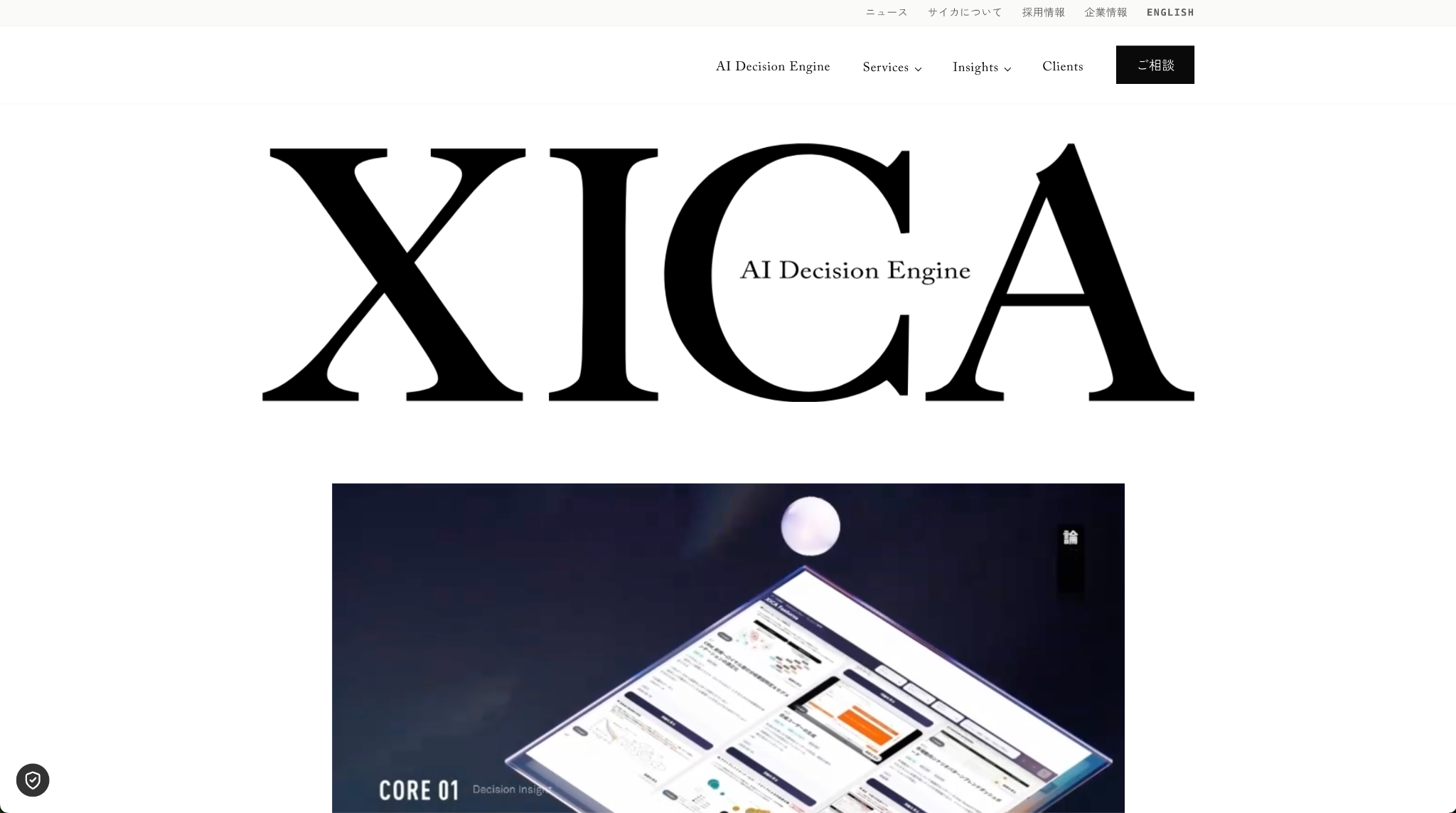
XICA Co., Ltd. is a data science firm established in 2012. In June 2026, the service brand will be changed to "AI Decision EngineThe company has revamped its services to include highly accurate analytical consulting cultivated since its founding, and its proprietary AI platform.XICA*AI PlatformThe company aims to integrate these elements. The synergy created by the collaboration of its data scientists, strategy consultants, and engineers is its strength.
In the marketing field, we support the decision-making of CMOs and management teams by optimizing advertising and media investments through elucidating marketing investment mechanisms, analyzing customer choice trends, understanding consumer trends, and designing strategies.
Our distinguishing feature is that we don't treat data analysis as a one-off deliverable, but rather design it as a continuous process, from interpreting the meaning of the data to enhancing decision-making and transforming organizational knowledge into assets. In recent years, we have expanded our support beyond marketing to include company-wide decision-making areas such as business strategy, brand strategy, and organizational transformation.
With a proven track record of supporting numerous major companies in consumer goods, food, retail, telecommunications, and finance, this service is a strong option for companies looking to establish data-driven decision-making as an organizational capability.
Transforming analytical "discoveries" into strategic "blueprints" to drive organizational change.
View our consulting services for data-driven marketing strategy design.
Representative company 2: BrainPad Co., Ltd.
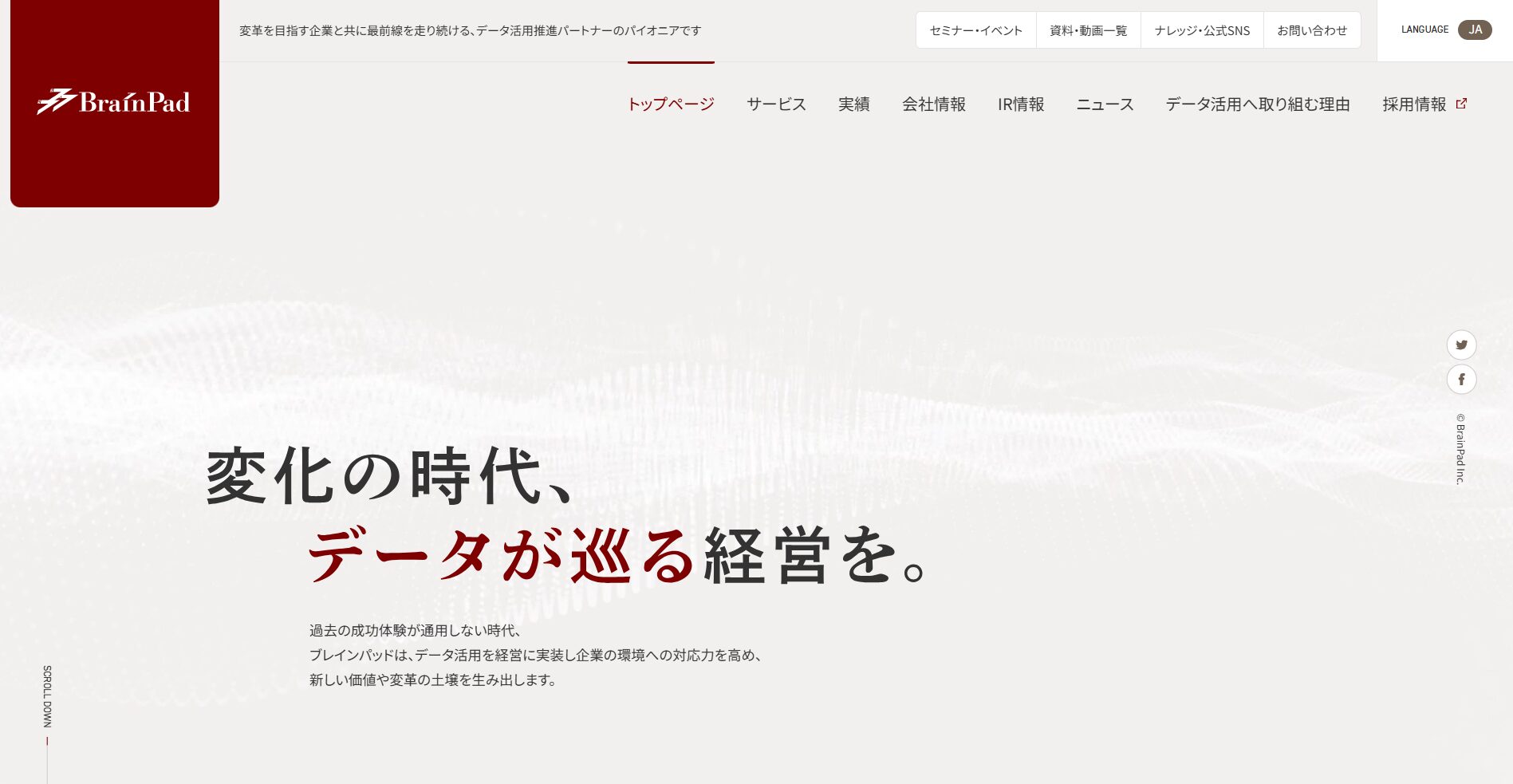
BrainPad Co., Ltd. is a data utilization support partner with over 200 data scientists on staff. We have a proven track record of providing data utilization support across various industries.
In addition to owning its own DMP/CDP product, "Rtoaster," the company's strength lies in its ability to provide seamless support from the concept formulation to implementation and operation of data-driven marketing. It can be described as a consulting company that supports companies in utilizing data, with its core strength being the execution of data analysis and interpretation.
Source:BrainPad Co., Ltd. Official Website(Capture, number of data scientists), as of July 2026
Representative company 3: PLAID ALPHA

PLAID ALPHA, provided by PLAID Inc., is a professional service centered around the CX platform "KARTE." It employs a hybrid model that combines "consulting x integration x growth" by CX and data experts.
A key feature is its support for marketing transformation starting from customer experience (CX), utilizing customer behavior data (1st party data) obtained from KARTE. Its collaborative, business-creation style makes it suitable for companies aiming to enhance customer touchpoints and customer experience.
Source:Plaid Official Website(Capture), as of July 2026
6. Procedures for requesting marketing consulting and expected outcomes
Once you've determined the type of consulting firm that best suits your company and established your selection criteria, the next step is the actual ordering process.
Here, we'll outline four practical perspectives you should consider before signing a contract: how to conduct a fair comparison of multiple companies through a Request for Proposal (RFP), key points to evaluate during negotiations, the timeframe for when results begin to become visible, and the alignment of compensation models and incentives.
Please note that the procedures and guidelines presented here are not a one-size-fits-all solution for every company. Please use them flexibly, selecting and adapting them to your own company's structure, budget, and decision-making speed.
6-1. How to Conduct a Competition (RFP)
To compare multiple companies on a level playing field, using an RFP (Request for Proposal) is effective. Verbal consultations alone will result in proposals from each company having varying assumptions and levels of detail, making a fair comparison difficult.
A realistic number of companies to contact is around 2 to 4, balancing the effectiveness of comparisons with the burden of evaluation. Including at least the following items in the RFP will improve the quality of proposals and the comparability of the proposals.
- Background of the request and the problem you wish to solve (please be as specific as possible)
- Current situation (internal structure, data held, past measures and results)
- Scope of support you require (how far does it extend from strategy planning/implementation/effectiveness evaluation/in-house development support)?
- The KGIs and KPIs you want to achieve, and the approach to measuring them.
- Budget range and desired schedule
- Evaluation criteria (what to prioritize when making a selection)
The general process involves preliminary interviews → RFP → proposals and presentations → evaluation and selection. When reading each company's proposal, it is helpful to check whether the following five points are clearly stated: (1) whether your company's challenges have been redefined, (2) whether the approach and methodology are specific, (3) who will actually be working on the project and how many people, (4) the performance indicators and measurement methods, and (5) the breakdown of costs. Checking these points will help you assess the substance of the proposal. It is also effective to confirm compatibility and the quality of support through spot consultations or initial projects before proceeding with a full contract.
6-2. Key points to consider during business negotiations
In business negotiations, rather than focusing on the merits or demerits of the proposal itself, it's more important to assess "compatibility with your company" and "their approach to achieving results" to prevent mismatches after the contract is signed. It's best to view these negotiations not as a judgment of good or bad, but as a way to align expectations and eliminate any discrepancies in understanding.
Examples of reliable signs
- They are speaking based on specific business figures and challenges of their own company.
- We can explain past support in terms of challenges, methods, and results.
- Try to clarify the definition and measurement methods of KPIs yourself.
- You will naturally encounter in-house development and knowledge transfer.
- Honestly define what you can and cannot do.
Examples of signs to check for
- The explanation focuses primarily on abstract frameworks and does not delve deeply into the company's specific challenges.
- Make a definitive promise of results.
- Rushing into a contract while the definition of KPIs remains vague.
- The actual workforce and the number of people involved are unclear.
- Only the total amount is presented, without a clear breakdown of the costs.
If any items fall into the latter category, confirming them specifically before signing the contract will allow both parties to get off to a satisfactory start.
6-3. Timeframe for achieving results (estimate)
The time it takes to see results varies greatly depending on the nature of the problem, the state of data preparation, and the internal organizational structure. Please note that the following are merely general trends and not guaranteed timeframes.
| Type | Initial output guideline | A guideline for when business results begin to become visible |
|---|---|---|
| Strategy | It takes several months from strategic recommendations to design. | Business results are measured over the medium to long term (1 year or more). |
| Advertising agency | Campaign design can take several weeks to several months. | Several months after the start of operations |
| Digitalization | Improving performance-based advertising takes several weeks to several months. | SEO and content creation: 6 months to 1 year or more |
| Research-related | Survey design to reporting: 1-3 months | Reflecting the results of the survey on decision-making |
| BtoB specialized | Building the MA/lead infrastructure took several months. | It takes 6 months or more for a deal to be converted into a sale and/or order. |
| PR-related | Exposure and buzz will last for several weeks. | Changes in brand metrics are medium- to long-term |
| IT consulting | Requirements definition to implementation: several months to over a year | From the post-implementation utilization phase |
| Data Science | Depending on the data preparation status, the initial setup may take some time. | After the model is built, the accuracy of decision-making continues to improve. |
While spot or hourly contracts can provide insights within a day or a few weeks, that's a separate matter from "organizational results." It's crucial to differentiate between wanting short-term insights and building results over the medium to long term, and then design your timeline accordingly.
6-4. Understanding the alignment of reward models and incentives
One often overlooked aspect is that each compensation model has a different "direction in which incentives tend to flow." This isn't about which model is superior, but rather about understanding whether the results your company expects and the compensation structure of your partners are aligned.
Please note that the following classification is based on a different approach than the aforementioned fee structure: "the structure of compensation generation and incentives."
| Reward model | Subject to charges | Directions towards which incentives tend to be applied | Things we'd like to clarify |
|---|---|---|---|
| Project-based | Project scope and duration | Completion of deliverables within the scope, setting of timeframes. | Clarification of deliverables and goals, and handling of out-of-scope tasks. |
| Consulting contract type | Ongoing involvement and consultation (time/duration) | Continuing and prolonging the relationship | Regular performance reviews and criteria for updates |
| Performance-based reward type | Achieved results (sales, cost reductions, etc.) | Achieving easily measurable short-term KPIs | Definition and exclusion criteria for KPIs (including cost reduction calculation criteria), and treatment of medium- to long-term themes. |
| Spot/hourly contract type | One-off consultation/working hours | The quality of the insights given on the spot | Sharing the background of the issue, conditions for continuing the request |
| Advisory type | The value of expert knowledge, judgment, and recommendations | Quality of decision support and reputation as a partner | Because results tend to be intangible, it is necessary to define the output and estimate the return on investment in advance. |
In any of these models, if the compensation structure doesn't align with the company's expectations, it's easy to end up in a situation where "there are no contractual issues, but the direction of results doesn't match." Checking in advance which compensation structure aligns with your company's challenges, while comparing it with market rates, will lead to a more satisfying choice.
*Supplementary information when considering advertising agency-based consulting services.
Advertising agencies have the advantage of being able to provide consulting and media buying services as an integrated package. Their ability to seamlessly handle everything from strategy planning to execution is a significant benefit.
On the other hand, if media buying constitutes a portion of the company's revenue, there may be a secondary incentive linked to the volume of advertising spent, separate from the consulting fee. This is not a matter of good or bad, but rather something that should be understood as a structural issue.
7. Points to note when hiring a marketing consulting firm
Hiring a marketing consulting firm can yield significant results if used appropriately, but it also has drawbacks such as external dependence and cost, and there are points that can easily lead to failure if overlooked.
Consulting support is not inexpensive, and contracts often extend over the medium to long term, so it is crucial to understand the risks properly and take countermeasures before engaging their services.
Here, we'll summarize three important points to keep in mind when formulating your request.
7-1. Relying on external sources can make it difficult to accumulate know-how within the company.
While receiving consulting support can lead to quicker short-term results, in the long term, there is a risk that "internal know-how will not be retained due to external reliance."
It's actually not uncommon for the quality of marketing activities to decline the moment a consultant leaves the company.
A typical pattern in which this risk arises is when a request is "outsourced" completely.
If you outsource everything from strategy planning to execution, and internal members don't actively participate in decision-making and operation, the consultants' decision-making processes and expertise will become a black box.
As a result, after the contract ends, they find themselves in a state of "not knowing what was being managed or how," creating a vicious cycle where they cannot operate independently without repeatedly hiring consultants.
To avoid this risk, it is important to either include "support for in-house development" in the request when making the request, or to establish a system in which internal members are actively involved in the project. It is also important to request that the consulting firm share knowledge such as meeting minutes, analysis logic, and operational flows, and to view the contract period as "an investment period to enhance your company's organizational capabilities" as a key to success.
7-2. Achieving the desired results will require a corresponding expense.
Marketing consulting involves the involvement of specialized personnel and therefore requires careful consideration of the associated costs.
The uncertainty of "paying a fixed fee without knowing if results will be achieved" is a major concern for companies considering making such a request.
Costs vary depending on the type of contract, but as shown in "3. Cost Range" above, for project-based contracts, small to medium-sized projects typically cost around 100 million to 500 million yen, while large projects can cost 1,000 million to tens of millions of yen. Even for consulting contracts, a monthly fee of 20 to over 100 million yen is the general range.
If consulting fees account for too large a proportion of the overall advertising investment, it can put pressure on the budget available for implementing strategies.
To avoid this risk, it is important to estimate the expected return on investment from consulting before signing a contract.
For example, by conducting cost-benefit simulations linked to your company's business metrics, such as how much annual benefit can be expected if advertising ROI improves by 10% through consulting support, or how much sales will increase due to an improvement in the conversion rate to deals, you can determine the appropriate scale of investment.
Rather than choosing based solely on price, finding the right balance between the support provided and the cost—a balance that offers the highest return on investment—will lead to a less regrettable decision.
7-3. The metrics for evaluating effectiveness must be agreed upon before the contract is signed.
One aspect often overlooked in consulting support is the need to clearly agree on "how results will be measured" before signing a contract.
If support begins with vaguely defined metrics, discrepancies in perception are likely to occur midway through or at the end of the contract period, such as "the expected results haven't been achieved" or "the consultant claims results have been achieved, but this doesn't match our company's experience."
To avoid this risk, it is crucial to specifically define the KPIs (Key Performance Indicators) that define "what constitutes success" at the pre-contract stage.
For example, by selecting metrics that are appropriate to your company's business phase and challenges, such as lead generation, conversion rate, conversion rate, advertising ROI, brand awareness, and NPS, and clearly documenting the measurement methods, exclusion conditions, and evaluation timing, you can objectively evaluate your performance at the end of the contract.
Furthermore, it is effective to include not only "numerable outcome indicators" but also qualitative evaluation axes such as "whether the quality of decision-making has improved" and "whether data-driven decision-making has become established within the organization" when evaluating the effectiveness.
Especially when aiming to enhance organizational capabilities in the medium to long term, it's important to consider not only visible results but also the progress being made in systematizing organizational decision-making processes and transforming knowledge into assets as evaluation criteria.
If you can reach an agreement with the consulting firm in advance, you can constructively monitor the progress during the contract period, making it easier to build a partnership that satisfies both parties.
8. Frequently Asked Questions about Marketing Consulting Firms
We have compiled a list of frequently asked questions and their answers regarding the consideration of hiring a marketing consulting firm.
8-1. How can I determine the cost-effectiveness of marketing consulting?
To assess cost-effectiveness, it is effective to clearly define KGIs (ultimate goals such as sales and profits) and KPIs (intermediate indicators such as lead count, conversion rate, and advertising ROI) before signing a contract, and then simulate how much these are expected to improve with consulting support.
For example, by linking calculations to your own business metrics, such as "How much can we expect to see annually if our advertising ROI improves by 10%?" or "How will a 5% increase in the conversion rate into sales opportunities affect our revenue?", you can determine the appropriate scale of investment.
Furthermore, agreeing on metrics for evaluating effectiveness before signing a contract allows for objective evaluation during and after the contract period. Many consulting firms offer free consultations and initial interviews, so it's recommended to confirm the "expected return" specifically along with the estimate.
8-2. Can small and medium-sized enterprises and startups request consulting services?
It is possible to request their services. An increasing number of consulting firms are offering spot contracts starting from tens of thousands of yen per month, or flexible performance-based fee structures, specifically for small and medium-sized enterprises and startups.
However, some companies, like large strategy consulting firms, charge tens of millions of yen or more per project, so it's important to choose a company that matches your company's business scale and budget.
Generally speaking, mid-sized consulting firms specializing in B2B, digital technologies, or data science tend to offer more comprehensive support services for startups.
During business negotiations, it's important to check their track record of supporting companies of a similar size to your own, and to narrow the scope of support to avoid excessive investment.
In the early stages of a startup, there's the advantage of being able to make decisions with a small team close to the management team, so using consultants only for the initial strategy planning phase can also be a valid option.
8-3. Are there any typical patterns of failure when hiring a consulting firm?
There are three main patterns of failure.
The first type is the "outsourcing" type of request, where internal members are not involved in the decision-making process and the entire project is left to the consultant. When the contract ends, the know-how is lost, leading to a vicious cycle of repeated requests.
The second issue is "ambiguity of performance indicators." If support begins without agreeing on KPIs before the contract is signed, discrepancies in understanding are likely to occur during evaluation.
The third issue is a "mismatch with the company's challenges." If the consulting firm's area of expertise does not align with the company's challenges, the proposals will remain superficial and will not lead to results.
To avoid these problems, it is important to keep three things in mind: (1) involve internal members in the project, (2) clearly define performance indicators before signing a contract, and (3) select a consulting firm with expertise that matches your company's challenges.
8-4. Is it possible to request services for short periods only?
Yes, it is possible. Many consulting firms offer spot/hourly rate plans, with rates starting from around 5,000 yen to tens of thousands of yen per hour. However, if you hire a well-known consultant or an expert in a specific field, the cost can exceed 100,000 yen per hour.
One-off requests are suitable for situations such as "wanting a third-party opinion on a specific measure," "wanting expert review before a management meeting," or "wanting to consult first before considering a retainer agreement."
However, since one-off requests may not be sufficient to address the organization's fundamental issues, it is more practical to consider switching to a project-based or consulting contract for themes that require continuous improvement.
We also recommend using this service on a one-off basis to assess compatibility with the assigned staff member and the quality of support provided, before proceeding with a full-fledged request.
8-5. How should I choose if I want industry-specific support?
If you want industry-specific support, first check their track record of supporting companies in the same industry as yours, or companies with similar supply chains and customer structures.
This is because purchasing processes, regulations, the number of decision-makers, and the review period differ significantly between B2B and B2C, and across sectors such as finance, healthcare, manufacturing, and real estate. In particular, an understanding of industry-specific laws and regulations, such as the Pharmaceutical Affairs Law in healthcare and various industry-specific laws in finance, is a crucial factor in decision-making.
During business negotiations, it's helpful to check not only the names of companies they've supported, but also the industry, company size, challenges, scope of support, and performance indicators to better assess compatibility with your own company. Even if specific company names cannot be disclosed due to confidentiality agreements, you can still inquire about the outlines and approaches of similar projects. In areas where trends and consumer behavior change rapidly, it's also a good idea to check if they have support cases from the past one to two years.
Furthermore, it's not just the depth of industry knowledge that's important, but also the extent to which they can handle everything from strategy planning and implementation to effectiveness evaluation. Some companies have a good understanding of the industry but are weak in implementation support, while others are strong in implementation but weak in upstream design. Therefore, choosing a company that matches the scope of support your company needs is appropriate for industry-specific needs.
9. Summary: Choose a marketing consulting firm that suits your company's challenges.
This article has covered the role of marketing consulting firms, typical costs, key points for choosing one, the characteristics of eight different types of firms and their representative companies, points to keep in mind when hiring one, and frequently asked questions.
Marketing consulting firms can be broadly categorized into eight types: strategy-focused, advertising agency-focused, digital-focused, research-focused, B8B-focused, PR-focused, IT consulting, and data science-focused. Each type has its own area of expertise and support approach.
Before considering "who to ask," the starting point for choosing the right partner is to first clarify "what problems your company wants to solve" and "what phase you are in."
When selecting a consultant, you can prevent mismatches after making a request by considering five points: (1) matching your company's challenges with the consulting firm's expertise, (2) track record of supporting similar industries and companies of similar size, (3) a comprehensive support system from strategy planning to implementation, (4) a system for data utilization and effectiveness evaluation, and (5) a balance between cost and support provided.
In recent years, more and more companies want to instill data-driven marketing decision-making as an organizational capability, and data science support utilizing statistical models and machine learning is gaining prominence as one of the options.
The perspective of shifting marketing investment from "intuition and rules of thumb" to "data-driven decision-making" is another important point to consider when choosing a partner.
Use this article as a guide to find a marketing consulting firm that suits your company's needs and maximize your marketing results.
Related Articles
-
 Column
Responding to advertising budget cuts: Three data strategies for discussing "business growth" with management.
- Column
Four things you should understand first in order to leverage generative AI in marketing strategy decision-making.
- Column
What is marketing accountability? The essence and practice of "accountability" demanded by management.