What is Endless Aisle? Benefits & Case Studies
What is Endless Aisle?
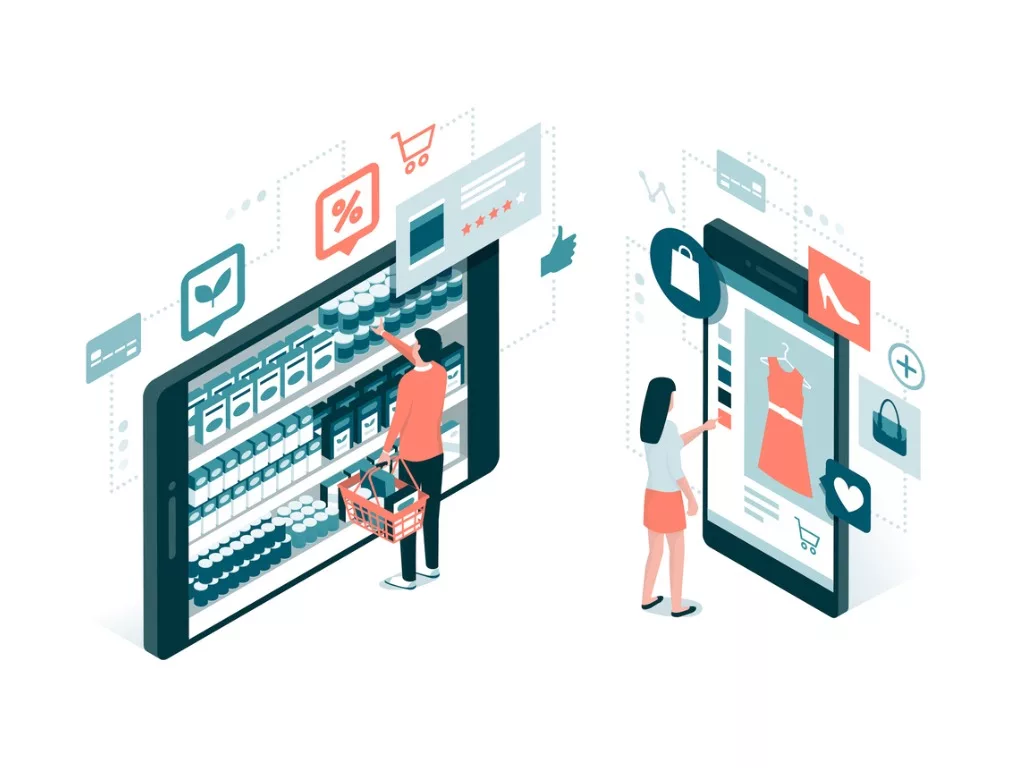
The endless aisle is a type of omni-channel initiative that refers to a service that allows customers to order products on the spot from an e-commerce site and have them delivered to their home or store, even if the product is not available in the physical store.
Omnichannel and the endless aisle
Before explaining the endless aisle, let's explain the higher-level concept of omnichannel. Omnichannel is a marketing initiative that aims to integrate all kinds of channels, including stores, e-commerce sites, social media, and call centers. Consumers make purchases through multiple channels across the internet and real world, such as checking out products on a website and purchasing them in a physical store, or seeing products on social media and purchasing them on an e-commerce site. In order to respond to this type of consumer behavior, it is necessary to build an omnichannel that encourages consumer purchases across channels, rather than each channel being independent.
Endless aisle is one of the measures taken for this omni-channelization, and refers to a service where if a product that a user wants is out of stock, they are directed from the physical store to an e-commerce site, where they can place an order and later pick up the product at home or at the store.
By the way, simply directing users who visit a physical store to an EC site is not called an endless aisle. In order to be called an endless aisle, efforts must be made to reduce the stress that users experience when switching between channels.
For example, instead of a store clerk simply urging the customer to purchase an item on the EC site because it is out of stock in the store, endless ordering can only be achieved when a customer can easily connect to the EC site and place an order using a dedicated tablet or device, even if they do not have a smartphone.
What are the benefits to customers of introducing the endless aisle? First of all, even if a product is out of stock, the inventory of other stores and EC sites can be checked, so there is no need to go to other stores or EC sites to look for the same product again. Also, there is no need to wait until the out-of-stock product is restocked at the store and then visit the store again.
Furthermore, Japan has a well-developed logistics network, so if there is stock, even if the product is out of stock in the store, it will arrive in 2-3 days in most areas. By introducing endless aisles in this way, users can purchase products across channels without stress.
Advantages of Endless Aisle for Service Providers
So what are the benefits for service providers who introduce endless aisles? First, they can prevent opportunity loss due to out-of-stock items. If a store is out of stock of a product, users who want the product will leave and go to another store.
It's fine if it's a store affiliated with your own company, but if it's a store owned by a different company, the sales that would have been generated will be lost to other companies. Also, if the product is out of stock even though the customer has come to the store, it will lead to a decrease in customer loyalty.
By introducing endless aisles, you can prevent loss of opportunities and a decline in customer loyalty. Furthermore, you can expect an increase in purchase rate and average customer spending. Unlike warehouses, stores have a limited amount of inventory because they must display products in a way that makes it easy for users to choose and want to buy them. Therefore, products that are no longer in demand or have special sizes or specifications cannot be placed in stores.
Another benefit of introducing endless aisles is that they can recommend rare and special products that cannot be sold in stores to users, making it easier to increase purchase rates and average customer spending.
Endless aisle case study
One of the earliest examples of endless aisles in Japan was an initiative started by Daimaru Matsuzakaya Department Stores Co., Ltd. in November 2013. In cooperation with major apparel manufacturer World, the store launched a service where, if a product was out of stock in the store, store staff could use a terminal to check the stock on an e-commerce site and then pick up the product at a later date either at home or in the store.
Incidentally, Daimaru Matsuzakaya also simultaneously launched a service called Click & Collect, which allows customers to order products online and pick them up at the store, as another initiative towards omni-channelization.
reference:Daimaru Matsuzakaya and World, two services promoting omnichannelAdidas Japan Co., Ltd. also began offering the endless aisle service at 2014 of its directly managed stores in May 5.
In October 2017, the company launched a click and collect service, and in December 10, it introduced local inventory ads provided by Google to further promote omni-channelization.Adidas installs "endless aisles" in 15 directly managed stores as part of omnichannel initiative
Summary
So far, we have explained about the endless aisle. The endless aisle is a type of measure for omnichannelization, but it is not enough to just use the endless aisle.
As can be seen from the case studies, companies that have implemented Endless Aisle also implement other omnichannel initiatives such as click-and-collect and local inventory advertising to further their omnichannel approach.
Rather than considering whether or not to introduce the endless aisle alone, it would be better to develop an omni-channel strategy and then consider when the endless aisle should be introduced within that strategy.
Other Marketing Terms Explained
- What are in-feed ads: advantages and disadvantages
- What is campaign management? The difference between CCCM system and MA system
- What is programmatic buying of ads?
- What are demographics? Examples of how they can be used in marketing and explanation of their characteristics
- What is a pop-up store? The benefits of opening one
- What is Ambassador Marketing? How is it different from Influencers?
- What is webrooming? Why do we do it? How is it different from showrooming?
- What is Mobile Deep Linking and How Do I Implement It?

Related Articles
-
 Column
Responding to advertising budget cuts: Three data strategies for discussing "business growth" with management.
-
 Column
Four things you should understand first in order to leverage generative AI in marketing strategy decision-making.
-
 Column
What is marketing accountability? The essence and practice of "accountability" demanded by management.