The future of marketing will be created through a "mixed martial arts" contest between advertisers, advertising agencies, creators, and media

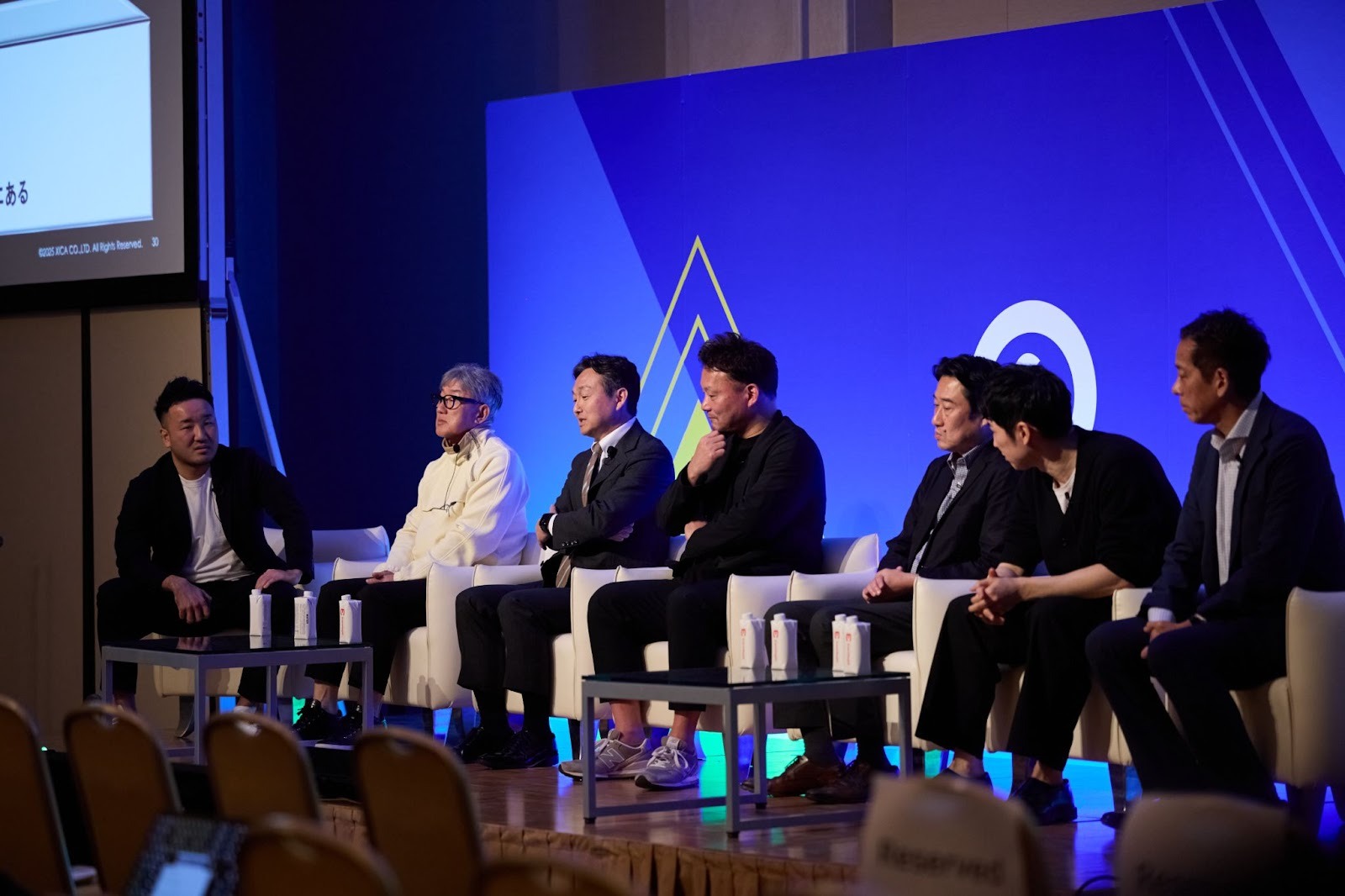
With the evolution of digital technology, marketing has become more sophisticated and complex, and each measure is becoming more specialized. Could this partial optimization be one of the factors that hinders marketing success? Wouldn't it be possible to achieve even better results by organically connecting highly specialized professionals and discussing face-to-face? This is the idea behind the launch of the Borderless Marketing Community (BMC). The four directors of the BMC took to the stage for a keynote speech to commemorate the launch. Through a dialogue between directors representing different positions - advertisers, advertising agencies, creators, and media - they revealed the divisions that exist in marketing, and exchanged opinions on the future of marketing that will be realized once these divisions are eliminated.
【Speakers】(From the right in the photo)
- Media Representative: Taro Kurosaki, Nippon Television Network Corporation
- Representative advertiser: Sumitomo Mitsui Card Co., Ltd., Mr. Takeya Sasaki
- Advertising company representative: Naoki Toneri, KazePro Inc.
- Creator representative: Ryo Teshima, Fluorescent Tokyo/DESIGN BOY
- Data analysis representative: Yoshiaki Hirao, XICA Co., Ltd. *Not participating in the keynote speech
- Moderator: Masaru Taniguchi, Sendenkaigi Co., Ltd.
【event date】 2022/2/21(Mon)
[Holding format]Online event (Zoom)
【theme】 "Marketing issues caused by division and the future where borderlessness is realized"
Divide 1: Advertisers vs. Advertising Agencies
"Absence of producer" is a major cause of division
(I.e. The spread of digital technology has led to an explosive increase in customer touchpoints, and marketing strategies have become more diverse and complex. As the scope of what marketing covers expands, more people become involved, and the definition of marketing varies depending on the person's position. This situation seems to be creating the "division" of marketing, which is the theme of this discussion.
There are various types of "divisions," but first I would like to hear the directors' views on the division between advertisers and advertising agencies.
Sumitomo Mitsui Card is promoting integrated marketing that goes beyond the boundaries between offline and online, with a customer-centric approach. In doing so, you have relationships with a variety of partner companies. What challenges and thoughts do you have regarding relationships with these companies?
Hiroshige I am constantly aware of the difficulty of "connecting what is disconnected." We receive support from partners with expertise in each strategy, such as mass, digital, and real-world, but when we ask each partner to help us individually, there is a high risk that we will end up with results that are different from what we intended when we connect each initiative and look at it as a total customer experience.
To prevent this from happening, we make sure to communicate to each partner the goals we want to achieve in the medium to long term and have them incorporate these into their individual measures.
We often hear that "advertisers become dependent on advertising agencies," but to make the most of the power of professionals, I think it is essential for advertisers to clarify their goals and intentions and take initiative. The worst situation is when they leave it too much to the advertising agency and don't accumulate know-how in-house, and can't evaluate their own measures. By combining the power of professionals, we can develop measures, and as an advertiser, we can properly evaluate them and provide feedback, and receive suggestions that can be used for the next action or other measures. That's the ideal relationship.
Door training While the number of people and companies with expertise in each strategy is increasing and each expertise is becoming more refined, the reality is that there are not many people who can take on the role of a "producer" who integrates various strategies and proposes them to clients. This is probably a major issue for advertising agencies.
I believe that in an advertising agency, it is the sales staff who should take on this role. At KazePro, too, it is the sales staff's job to take a bird's-eye view of various specialties, such as advertising creative, product planning and development, and media planning, combine them, and propose them to clients.

(I.e. As a creator, you work not only in advertising, but also in a borderless way, transcending the boundaries of expression methods and media such as video, still images, space, and music. I think creators are also being asked to play the role of integrated communication professionals, going beyond the traditional titles such as "CM planner" or "copywriter" for each media.
Teshima That's right. In the past, there were divisions like "this is advertising, this is not advertising" or "this is marketing, this is not marketing," but I feel like those boundaries are gradually disappearing recently.
At first I was scared to take on a job that went beyond my title, but as I continued to write copy and storyboards, I began to see new arenas in which I could compete, and that's how I got to where I am today.
But when we say "integrated communications," we can't do everything by ourselves. We put together the entire communication process by doing what we can, and assigning the most suitable person for what we can't. Creators don't just wait to be assigned, they become the ones who assign. I feel that we are living in such an era.
(I.e. Mr. Kurosaki, what are your thoughts when you look at the relationship between advertisers and advertising agencies objectively?
Kurosaki Advertisers and advertising agencies are quick to respond to changes in the world around us. For this reason, we at terrestrial television broadcasting stations also face the challenge of how to adapt to these rapid changes.
As the term "integrated marketing" suggests, with advertising and marketing options becoming more diverse, Nippon Television's sales force is also undergoing a restructuring. Previously, departments were divided into spot and time sales, but three years ago they were integrated into the "General Sales Center," and a system was transitioned to where one public relations officer is responsible for all products.
There is still a lot to do, but I believe that we are able to see things from the same perspective as advertisers and advertising agencies in that we are working to respond in a variety of ways with a consumer-first, customer-centric approach.
(I.e. As the number of ways for broadcasters to deliver their content to consumers increases, such as through connected TVs and apps, new advertising products are being developed one after another, making it increasingly difficult to propose new products.
Kurosaki I think so. Recently, we conducted a survey on "video media services that consumers need." When we asked people to rate them based on frequency of use and convenience, the number one spot went to the well-known "YouTube," followed by the VOD services "Netflix" and "Amazon Prime" in second and third place. Finally, TVer and terrestrial television made an appearance in fourth and fifth place, but among younger generations, "TikTok" ranked higher than television.
In the eyes of consumers, all media is on the same level; if it's convenient, they'll use it, if it's not, they won't. This is an interesting result, and in a sense it's a natural one, but I think that by accurately grasping this current situation and responding accordingly, we can continue to be an attractive medium for advertisers and advertising agencies.

Divide 2: Advertisers vs. Creators
"Sharing goals and their achievements" is the key to overcoming division
(I.e. Next, I would like to talk about the "disconnect" between creators and advertisers. Sumitomo Mitsui Card's Sasaki-san is a highly skilled "PR manager" who has won many advertising awards, but he is also a digital marketer who is actively involved in data-driven marketing. As the mind share of marketers at advertiser companies expands beyond "advertising/promotion" and "creativity" more than ever before, he speculates that communication between marketers and creators is becoming more difficult...
Mr. Teshima, are there any challenges you face when working with advertisers, and are there any things you are conscious of or do in order to collaborate effectively?
Teshima In the orientation, I interview clients to understand as accurately as possible the goal image they have in mind, rather than the KPIs written down in the orientation sheet. It's a big scenario, like "I want to increase the market share of this product by a certain percentage" or "I want to deliver this product to this new generation." Once I clarify where the client wants to go, I then interpret in my own way what they should do to get there.
Advertisers love their "children" so they talk in a way that asks, "How will you promote our products and services?" What I try to do is to deduce the characteristics of the product or service from the perspective of "how will consumers feel" - people who pick up the product in a store or watch a TV commercial for the product - and find a suitable story and worldview. If you don't do this, the advertising will be ineffective, the product will not sell, and you will end up with the unfortunate result of "changing the creator."
(I.e. A creator's job begins not only with the creative ability to produce communication content as output, but also with imagining and understanding the needs and feelings of the customers who will pick up the product.

Door training In the past, advertising agencies used to have completely separate roles for marketers and creators, and the working environment was that marketers would give the idea some thought before passing it on to the creators.
However, from what Teshima-san said, I feel that nowadays creators are leaning closer to marketers, and vice versa. I think the recent trend is that the boundary between marketers and creators is becoming blurred. And I feel that a more ambiguous boundary makes for better teams, better presentations, and better creative work.
Hiroshige As Teshima-san mentioned, I think it's important for advertisers to communicate what they want to achieve and their sense of purpose to creators. When it comes to talking about creativity, for some reason, the people giving the orientation tend to only show short-term goals. However, even if it's a campaign that sets short-term goals, I feel that the quality of the output will change significantly if the creators understand the mid- to long-term goals and concepts before they start working on it.
I always reflect on this, but as an advertiser, I always want to cram a lot of different things into one ad (laughs). I know that the rule is "one creative, one message," and I start out by thinking that, but in the end I end up asking for all sorts of things to be added.
Teshima and Toneri (Lol).
Hiroshige Naturally, there will be differences in perspective between what advertisers think and what creators think. We want to continue to hold discussions, understand each other's intentions and values, and work to bridge the gaps in order to create an output.
I am impressed by the high level of verbalization skills of creators. I often rely on them when persuading management. I think the best way to build strong relationships with professionals who have the power to drive major management decisions is to share a sense of purpose.
I have one question: do creators want to know about the final KPI achievement status of advertisers? Or not?
Teshima I would like to hear it. It would be best if the creative you created works without any problems, but if it doesn't work out, it's important to examine where the problem was, improve it, and try again. I think that in order to capture the hearts of customers, advertisers and creators should work together as "partners in crime."
Kurosaki As a media outlet, we would love to hear about this. As TV broadcasters, we receive many advertisements and air many commercials every day. However, the reality is that it is difficult to understand what goals advertisers have when they create their commercials.
I believe that each campaign has a KPI and the effectiveness of advertising is evaluated based on the degree to which it is achieved, but it is difficult for us to know the KPI or the degree to which it is achieved. Between the media and the advertiser, there are advertising companies and house agencies, and it is difficult for us to see the marketers of the advertiser companies. To put it a little dramatically, we feel that they are "someone you should not get close to."
As a media outlet, we would like to work together with advertisers and advertising agencies to share the goals they want to achieve, present the actual effectiveness of their advertising including quantitative data, examine what was lacking, and consider and implement the next actions.
Hiroshige Not all effects can be quantified, and not everything that can be quantified is effective. Furthermore, I believe that creators create their work with conviction, so I sometimes worry that it's not good to talk too much about effects or KPIs.
Teshima Of course, I'm sure there are certain beliefs that "this is the only thing," but without knowing the destination the advertiser is aiming for, it feels like there's no belief or anything... I think this is something that "depends on the person" (laughs), but I think you can create something better if you ask.
Door training In the past, there were creators who would casually say, "I'm making my own work," but times have changed, and I think there are very few creators who don't care about the goals and destinations of their clients. It's a good idea to exercise your creativity while keeping in mind the advertiser's medium- to long-term goals and the KPIs for each campaign.
(I.e. Mr. Sasaki, from now on, it would be a good idea to be frank with everyone about the progress of your KPI achievements!

Divide 3: Media Perspective
There is a way forward in "co-creating advertising menus"
(I.e. Advertisers need to utilize the media in order to connect with future customers who have yet to be met. Collaboration with media that has contact with consumers before they become customers is essential for marketing activities.
You run your media business in collaboration with people from various backgrounds, including advertisers, advertising agencies, and creators. From your perspective, do you feel there are any challenges in your relationships with advertising stakeholders?
Kurosaki The biggest challenge is the explosive increase in options. As the provider of options, we must keep up with the magnitude and speed of change. We need to consider the optimal combination of options depending on the purpose of the campaign and provide them while maximizing the media value.
(I.e. Television broadcasting stations are media companies that provide advertising space, but they are also groups of creators just like advertising agencies. They have many attractive resources and can provide a wide range of value to advertisers.
Kurosaki That's true, but because terrestrial broadcasting is a licensed business, it has to conduct business under a variety of rules, which often restricts the creative scope, which is troubling.
For example, we receive many requests to "feature products or services in the main content," but we continue to experiment with how to make this happen within the rule that "advertising and the main content must be clearly distinguished."
One example of a menu that was born through trial and error is a recent commercial that was very well received, shot on a TV show set. Data also shows that it is more effective at raising awareness and lifting the brand than regular commercials. The key seems to be how to evolve advertising plans that utilize the power of content like this.
(I.e. Because it is a licensed business, there are many rules, such as the timing of submission and ad review, that may make advertisers and creators think, "Can't they be a little more flexible?" However, it is often difficult to change these things immediately.
Kurosaki If it were just a matter of Nippon Television, I think we could respond more flexibly in various ways... The good thing about terrestrial television commercials is that they can be placed in the same way on terrestrial television stations nationwide. To do that, common rules are necessary.

(I.e. Mr. Sasaki, I believe you also use television in your marketing. From an advertiser's perspective, what are your thoughts on the television medium?
Hiroshige We have been actively using infomercials since last year, which you mentioned earlier have been well received. When talking about advertising creatives, I said that "advertisers tend to want to cram everything in," but we use infomercials to communicate facts that cannot be conveyed in a normal 15 to 30 second commercial, and to promote understanding. We feel that they are effective, so we would like to continue to develop menus like this (laughs).
As Mr. Kurosaki mentioned, we would also like to work together to verify the effectiveness of the campaign. In the digital world, precise targeting and effectiveness analysis are rapidly advancing. I believe that Nippon Television has a proactive stance, having introduced core viewer ratings (※) relatively early in the industry, so we would appreciate it if you could also develop an advertising menu with high targeting accuracy.
*Core viewership rating
Although the definition differs depending on the broadcasting station, it generally refers to the viewership rate of the so-called family demographic, "men and women aged 4 to 59." It can be said to be an indicator of how much viewership is among young people who have a strong desire to spend and are likely to become customers in the future.
Kurosaki: We would like to get your opinions and make things happen as we go. We have a variety of options available, including not only terrestrial broadcasting, but also catch-up streaming on TVer, YouTube streaming, and Twitter-linked projects, and we would like to propose the best combination for our target audience, so we would be very grateful if you could give us your opinions on things like, "How about this method?" or "Can't we do this more like this?"
(I.e. Although we are all in different positions, meeting together like this gives me the feeling that we will be able to work together across the boundaries. It seems that the lack of opportunities for dialogue on a daily basis is what is delaying the elimination of division.
Kurosaki That's right. As Mr. Sasaki mentioned, I think that the requests and needs of advertisers, such as "Can we do this?", will become even more diverse as we continue to have dialogue with them. I would like to work towards making these requests a reality by increasing the number of opportunities for dialogue.
These uncertain times are a good opportunity to heal divisions
(I.e. Through the talks from different perspectives, I think I have a vague idea of where the current "division" is. On the other hand, all of the directors who are speaking today are already working to overcome that division. I felt that there were signs that this division will be resolved in the near future.
What kind of future do you think we will see once all these divisions are resolved?
Teshima When one success story emerges, anti-itself emerges. Division is born after union, and I think that union and division are repeated. However, through today's discussion, I was able to feel the possibility that there are still many things I can do and want to try in the places that are divided and not visible.
There were many hints in today's talk. For example, I was very interested in the infomercials that used TV sets. But on the other hand, I realized that I had a fixed idea that it was not my field. I thought that by getting rid of such a fixed idea, I could do something more interesting.
Door training Advertisers, advertising agencies, creators, media. There are divisions between each of them, but I realized that there are very few opportunities for creators and media to talk directly. Also, as Mr. Kurosaki mentioned, it is striking that there is still a deeply rooted unspoken rule that "advertisers and media should not talk directly."
Until now, I had found it difficult to imagine Mr. Teshima and Mr. Kurosaki sitting knee to knee and having a meeting, but once that started to happen naturally, I felt that new horizons in marketing would become apparent.
Hiroshige What Toneri-san said is my biggest "ambition" and "dream." I want to see the four fields here today come together and evaluate the policies together, and create a chemical reaction that has never been seen before. To achieve that, I hope we can create an environment where we can punch each other without any guarding (laughs).
Kurosaki Of course, there is no rule that says advertisers or creators cannot speak directly with the media, but over the years, there may be some parts of the system that have become fixed in place over the years.
On the other hand, the advent of digital has forced many advertising methods to change or given birth to new ones. In projects such as the infomercials mentioned earlier and "cross program promotions" (※), it is essential that Nippon Television's production and public relations departments, advertising agencies, and advertisers work together. I think that coming up with new methods and advertising products will also change the structure and relationships of the people involved.
*Cross Program Promotion
A proposal-based product that promotes a wide range of content by combining commercial time slots, the main program, the web, social media, etc.

(I.e. There may be a certain amount of hesitation between people, and many years of business practices may lead to unconscious beliefs that "that's no good." By removing those invisible walls and talking, things may change surprisingly smoothly. I think that is one of the roles of the Borderless Marketing Community (BMC).
Finally, please tell us what you expect from BMC in the future.
Teshima It's a "fight," isn't it? (laughs) With the pandemic as a backdrop, and many things in a state of chaos, I think it's a good opportunity to start a borderless initiative. With the future so uncertain and no one being able to see it, I hope we can come up with concrete measures as soon as possible.
Even if it is a success, or there are points for improvement, new ways of thinking and doing things cannot be developed without trial and error. I have high hopes for BMC's activities and am happy to be able to participate.
Door training As someone who has been involved in advertising for many years, I am very concerned about the stagnation of the advertising industry in recent years. It is no longer an industry that young people aspire to, and various problems that were not previously known to the public are emerging. I hope that the launch of BMC will be an opportunity for the industry to change into a more positive one, with each advertising agency no longer simply pursuing its own profits, but instead becoming a tool to raise the overall industry level and liven up Japan as a whole.
Hiroshige It is very interesting to see highly specialized professionals coming together under one vision and overcoming divisions. I hope that through our activities we can create a concrete roadmap and measures.
Kurosaki Just from today, I have learned so many hints and feel like my horizons have broadened. I hope that this opportunity will encourage us to listen to as many different opinions as possible from a wide range of people, ask ourselves what we can do, and use this as an opportunity to grow.
(I.e. For consumers, it doesn't matter if it's online or offline, or whether it's advertising or PR, it's all the same experience. It's truly borderless.
I was reminded that what is needed to achieve truly consumer-oriented marketing is for professionals from different fields to join forces and become a community that creates value for society and consumers.
Related Articles
-
 About XICA
Next-Generation Management Required in the AI Era: How to Guide the Evolution of Individuals and Organizations | AWA 2025 Keynote Session Report
-
 About XICA
DataScience for Growth: Marugame Seimen's Method for Maximizing "Winning Probability" Through Data Science – The Key to Decision-Making That Overcomes Uncertainty [MarkeZine Day 2026 Spring Event Report]
-
 About XICA
ST Corporation's Challenge: Redefining Mature Brands Through "Data Science x AI x Human Resources" [Brand Summit Spring 2026 Event Report]